COP31 in Overtime
REPORTER:
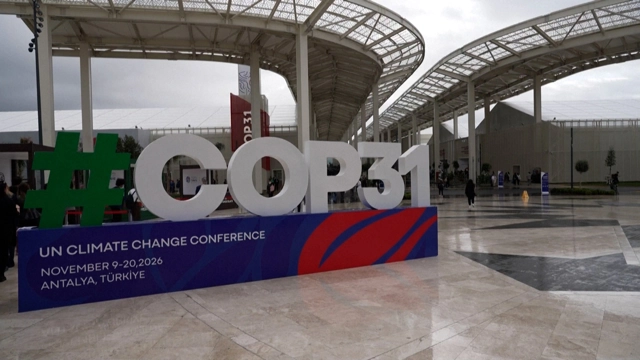
Talks at the COP31 climate conference in Turkey have gone into overtime with delegates from close to two hundred countries deadlocked over fossil fuels and climate finance.
A new version of the negotiating text could be ready Sunday. The conference’s president has said a deal could prove tough even after two weeks of talks. But he says there’s still a chance of a final agreement.
Murat Kurum (COP31 PRESIDENT):
We are still at the table. We are still negotiating with countries. At this point, we have not lost hope and we are working with all our might to achieve the Antalya Agreement.
REPORTER:
Over the course of the conference, four of Taiwan’s diplomatic allies—Guatemala, Belize, St. Vincent and the Grenadines and Paraguay—have backed Taiwan’s participation in global climate action.
COP31 President Murat Kurum said that he had "not lost hope" as talks stretched deep into overtime in the early hours of Sunday, November 22.
Negotiators from nearly 200 countries are struggling to bridge divisions over fossil fuels and climate finance, delaying an agreement at the two-week conference that had been scheduled to end on Friday, November 20.
The last major breakdown in UN climate talks came in Copenhagen in 2009, when countries failed to adopt the Copenhagen Accord by consensus in a setback for multilateral climate diplomacy.
As workers dismantled catering stands and exhibits at the venue, delegations shuttled between meeting rooms to discuss tactics, while others rested as they awaited a new version of the negotiating text.
Kurum met officials from the EU, Australia and Saudi Arabia in an effort to break the deadlock, but acknowledged a deal could prove elusive.
Murat Kurum (COP31 PRESIDENT):
We have sent the text, which we will call the final text, to the secretariat. It will be sent to all countries shortly. We will continue our discussions on that text, and we want to bring our final decision to our general assembly by 10-10:30 a.m. in the morning.
Murat Kurum (COP31 PRESIDENT):
There were expectations regarding the inclusion of fossil fuel statements, not lagging behind Dubai. I believe those expectations have been met. There were also expectations from developing and least developed countries regarding adaptation finance. We have reflected the statements and decisions that will meet those expectations in the text as well.
REPORTER:
Taiwan's government on Saturday thanked four diplomatic allies for supporting its participation in global climate governance at a recent United Nations climate conference, saying their backing reflected recognition of Taiwan's ability to contribute to international efforts.
The four allies -- Guatemala, Belize, St. Vincent and the Grenadines, and Paraguay -- voiced support for Taiwan during the high-level segment of the 31st Conference of the Parties to the United Nations Framework Convention on Climate Change (COP31), held Nov. 17-18 in Türkiye.
The Ministry of Foreign Affairs (MOFA) said in a press release that the countries supported Taiwan's participation in global climate mechanisms and recognized its efforts in carbon pricing, greenhouse gas emissions reduction, climate adaptation and clean technology.
Guatemalan Environment Minister Edwin Josué Castellanos López said Taiwan's efforts in carbon pricing, emissions reduction and climate adaptation demonstrated its commitment to climate neutrality, MOFA said.
St. Vincent and the Grenadines said an energy transition could not be considered just or inclusive if it left small island developing states behind or excluded willing partners, according to the ministry.
In a written statement, Paraguay said Taiwan had made important contributions to climate change mitigation and adaptation, technological development and international cooperation, and should be allowed to participate in the conference's activities.
MOFA thanked the four allies for speaking up for Taiwan at an important international forum, saying the country had gained experience and made measurable progress in emissions reduction, climate adaptation, clean technology and sustainable development.
 00:51
 00:59
 02:46
 00:47
 03:40
 02:18
 00:40
 01:59
 03:14
 00:34
 02:10
 02:20
 00:43
 00:43
 04:31
 00:25