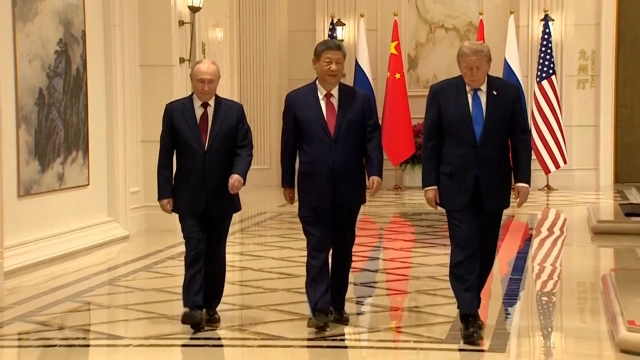
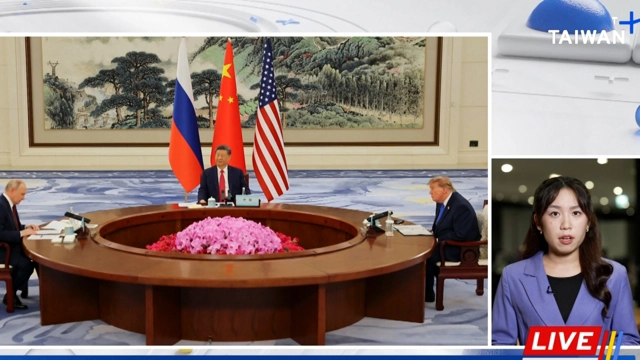
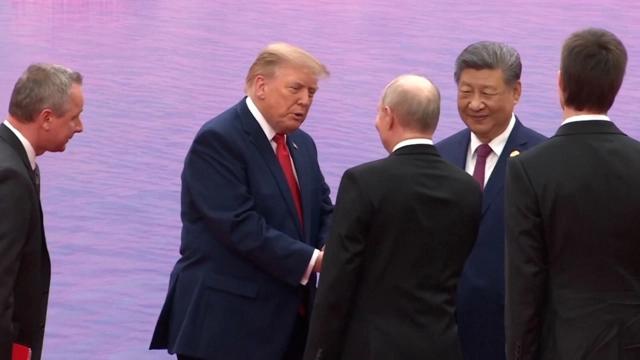
Touching down in Washington after a whirlwind trip to Asia, US President Donald Trump kept the details of Thursday's summit with Chinese leader Xi Jinping and Russian President Vladimir Putin to himself.
DONALD TRUMP, US PRESIDENT:
"It was really historic. Thank you."
The first trilateral meeting between leaders of the three countries was seen by some as more of a photo op than groundbreaking diplomacy.
In a four-point declaration, the leaders pledged to reform the UN, pursue talks to reduce nuclear risks, and boost global supplies of refined petroleum products amidst the energy crisis due to the war in Iran
They also warned the International Criminal Court against charging state officials. The court has issued an arrest warrant for Putin over alleged war crimes in Ukraine.
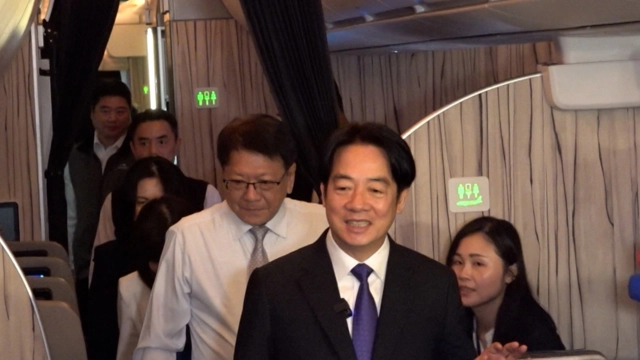
But in Taiwan, attention is on a separate meeting between Trump and Xi during the same afternoon.
It's the third time the two leaders have met this year. And with a proposed 14 billion US dollar arms sales to Taiwan still on hold, concerns are growing that Washington could use the deal as a bargaining chip in negotiations with Beijing.
According to Chinese state media, Xi urged Washington to QUOTE "do the right thing" on Taiwan to avoid damaging bilateral relations. It also claimed that Trump reiterated the US does not support Taiwanese independence.
But Washington has yet to release a detailed account of the bilateral meeting. Officials in Taiwan are questioning the accuracy of the Chinese report.
CHIU CHUI-CHENG, MINISTER MAINLAND AFFAIRS COUNCIL:
"I believe this is Chinese state media crafting a narrative for the US. Is that really what happened? That's for the US to clarify. Based on our preliminary verification the claims in this report are not true."
Analysts also cautioned against taking Beijing’s account at face value. But they say the bigger question is whether the shifting US-China relationship would affect Washington’s policy toward Taiwan.
KOU CHIEN-WEN, PROFESSOR NATIONAL CHENGCHI UNIVERSITY:
"China's position has remained consistent. What's really critical is how the US responds and what position it takes. On specific issues we are still very concerned about when President Trump will approve the [US$14 billion] arms sales to Taiwan. I think this will be the clearest indicator. If the US continues to delay arms sales to Taiwan it would suggest that US policy toward Taiwan is becoming restrictive. That's something we need to pay close attention to."
With Trump and Xi expected to meet again next month at the G20 summit in Miami, observers in Taiwan will be watching closely to see whether Washington moves forward with the delayed arms sales before the two leaders meet again.
 02:46
 00:47
 03:40
 02:18
 00:40
 01:59
 03:14
 00:34
 02:10
 02:20
 00:43
 00:43
 04:31
 00:25
 02:28
 02:36