War in the Middle East Triggers Global Oil Shock
REPORTER:
A Thailand-flagged ship smolders—one of two vessels Iran hit on Wednesday as it chokes off a key route for global oil supplies.
REPORTER:
Iran’s blockade of the Strait of Hormuz, just to its south, has sent oil prices soaring. And its new supreme leader—or someone writing in his name—says this will continue.
REPORTER:
Mojtaba Khamenei was named supreme leader on March 8, after US-Israeli strikes killed his predecessor — his father Ali Khamenei — and set off a regional war. He’s not been seen in public since, but state TV released this — his first statement since taking office — read by a news anchor.
No name given:
Certainly, the leverage of blocking the Strait of Hormuz must continue to be used. And opening other fronts where the enemy is highly vulnerable, if the war continues, will be considered while observing strategic interests.
REPORTER:
The statement also vowed vengeance for strikes, including an apparent US attack on a girls’ school in the south of Iran that reportedly killed over 165 people, mostly children. And it urged Iran’s Arab neighbors to close US military bases on their soil.
REPORTER:
Israel, a country with a record of assassinations inside Iran, is already threatening the country’s new leadership — while encouraging Iranians to overthrow it.
Benjamin Netanyahu (ISRAELI PRIME MINISTER):
I wouldn’t issue life insurance policies on any of the leaders of the terrorist organizations. This is their patron of terrorism and I don’t intend to provide an exact report here about what we are planning or what we are going to do.
REPORTER:
But this is no longer just a conflict between the US-Israel alliance and Iran. Missiles have flown across the Middle East with few countries unscathed — and Israel has reopened a front in Lebanon to its north as it battles Iranian proxy Hezbollah.
REPORTER:
Strikes like these ones around Lebanon’s capital Beirut continue as Israel orders civilians out of much of Lebanese territory. The UN’s high commission for refugees says the number of displaced people across the region has ballooned since the war began.
Stephane Dujarric (UN SPOKESPERSON):
According to UNHCR, more than 4.1 million people have been internally displaced in Afghanistan, Iran, Lebanon and Pakistan since the beginning of the escalation. Additionally, some 117,000 people have sought refuge in another country.
REPORTER:
But there are those who stand to gain from this war — at least as some analysts see it. The US has lifted sanctions on Russian oil at sea for 30 days — a loosening of a sanctions regime in place since Russia’s 2022 invasion of Ukraine. While temporary and not expected to help Moscow much, it’s a further boost to a country that’s already seen oil exports boom since the war started.
Isaac Levi (CENTRE FOR RESEARCH ON ENERGY AND CLEAN AIR):
What our report shows is a 17% increase in Russia's oil export earnings in the first week of March compared to in February. And that means that they're earning from total fossil fuel exports, 510 million euros every day in the month of March from that oil, and gas exports used to finance that war in Ukraine.
REPORTER:
And so, the launch of one war helps push another war along. An intertwining of conflicts, both of which with no clear end in sight.
 02:15
02:15 03:07
03:07 03:23
03:23 03:25
03:25 03:23
03:23 02:42
02:42 02:54
02:54 02:56
02:56 03:24
03:24 02:33
02:33 00:27
00:27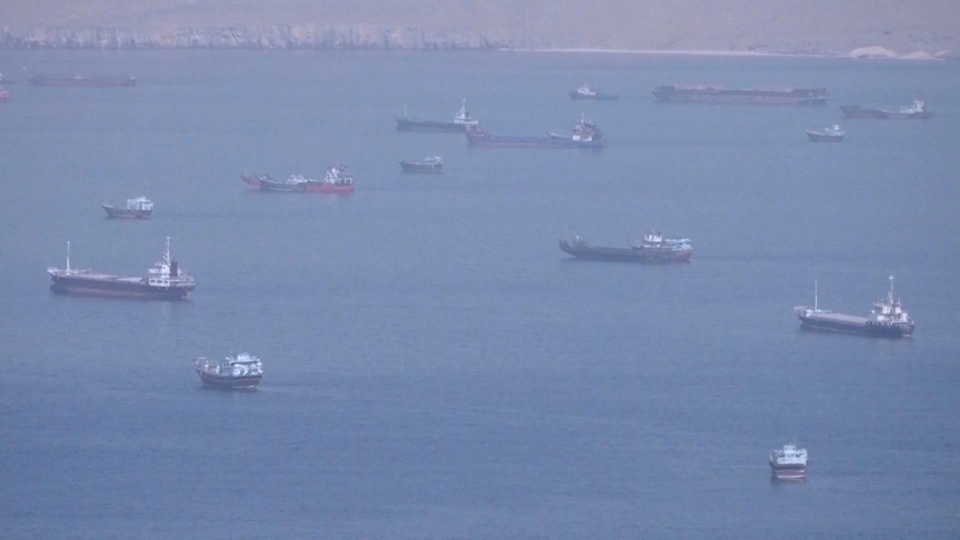 00:30
00:30 02:36
02:36 00:33
00:33 02:50
02:50 03:09
03:09