Strait of Hormuz Oil Crisis
REPORTER:
It’s been a total standstill for days in the Strait of Hormuz, a global chokepoint that a fifth of the world’s oil must pass through. Iran, somewhere beyond these waves, has blocked the strait after more than a week of US and Israeli strikes. Iran has threatened ships trying to break the blockade and started laying mines. US promises of a naval escort haven’t yet materialized. And so, ships like these sit at anchor, the crews unsure when, or if, they’ll get through.
REPORTER:
With the world facing an oil crunch and soaring prices, the International Energy Agency, or IEA, has come out with an unprecedented response.
Fatil Birol (IEA EXECUTIVE DIRECTOR):
I can now announce that IEA countries have unanimously decided to launch the largest-ever release of emergency oil stocks in our agency's history.
REPORTER:
400 million barrels. More than twice what it released after Russia’s 2022 invasion of Ukraine. Iran’s leadership, though, says moves like this won’t stop an oil shock—and it’s vowed not to let even a liter of oil from the region reach the US or Israel in particular.
Ebrahim Zolfaqari (SPOKESPERSON, IRAN MILITARY OPERATIONS COMMAND):
You will not be able to keep oil and energy prices artificially low through economic 'life support.' As we have already warned, if the war spreads across the region, expect oil to reach $200 per barrel. Oil prices follow the level of security in the region—and the source of that insecurity is you.
REPORTER:
For his part, US President Donald Trump says he has already won the war, that oil prices will come down, and that the US will soon wrap up its objectives in Iran.
Donald Trump (US PRESIDENT):
But oil prices are already coming back down and it's going to come down. But we're not leaving until that job is finished and it's going to be very fast. It's going to be very fast.
REPORTER:
Israel, though, has not used phrases like “very fast”—leaving the question of when peace will come open-ended.
Israel Katz (ISRAELI DEFENSE MINISTER):
This operation will continue without any time limit, as long as necessary, until we achieve all the objectives and win the campaign.
REPORTER:
And on the ground in the Middle East, the war seems far from won by anyone as missiles soar across the region and strikes hit targets—including civilian ones.
REPORTER:
Rescuers search for survivors after a strike on a Tehran street in this footage released Wednesday. Iran says strikes have killed over 1,300 civilians in its territory.
REPORTER:
These include a strike on a girls’ elementary school in the south of the country that killed more than 170, mostly children. Iran says the US was behind the strike—and on Thursday the New York Times reported that an initial inquiry by the defense department has found the US military was responsible.
REPORTER:
Iran’s President has outlined three conditions for peace: recognition of what he calls Iran’s legitimate rights, reparations, and stronger guarantees against a repeat of foreign attacks. But there are signs it's ready to keep going if the US and Israel are. There’s been at least one major cyberattack linked to Tehran.
REPORTER:
Meanwhile, strikes on oil infrastructure like these fuel tankers in Iraqi waters show this war isn’t giving any signs of slowing down, as the world’s energy supply hangs in the balance.
Ryan Wu and John Van Trieste for TaiwanPlus.
 02:15
02:15 03:07
03:07 03:23
03:23 03:25
03:25 03:23
03:23 02:42
02:42 02:54
02:54 02:56
02:56 03:24
03:24 02:33
02:33 00:27
00:27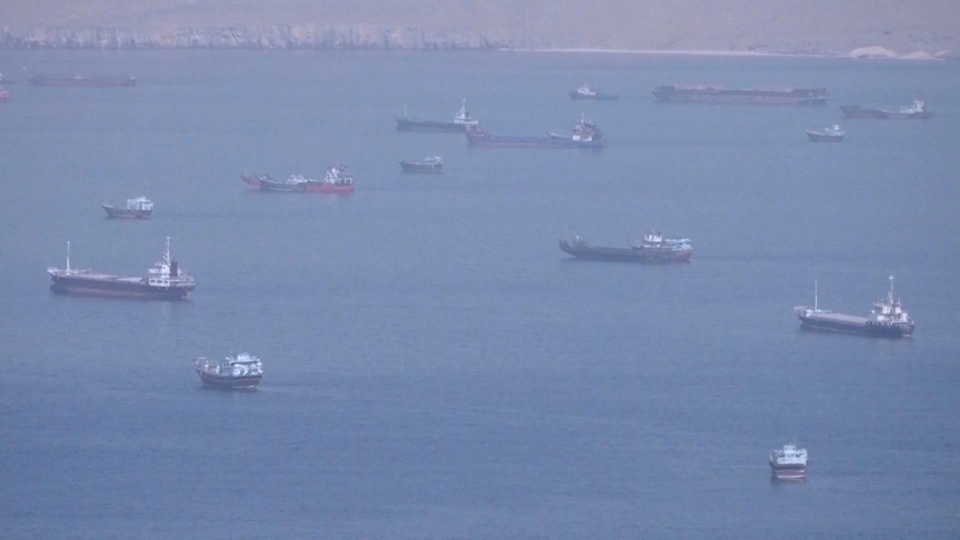 00:30
00:30 02:36
02:36 00:33
00:33 02:50
02:50 03:09
03:09