United Nations at 80: At a Crossroads
==
REPORTER:
The world’s largest international organization is turning 80.
Founded in 1945 at the end of World War II, the United Nation’s stated mission was to ensure global peace and security. Since then, it has overseen peacekeeping missions, delivered humanitarian aid, and mediated conflicts worldwide.
But the world the UN was created to serve has changed dramatically. It now faces complex challenges, from the Russia-Ukraine war.
Volodymyr Zelenskyy (UKRAINIAN PRESIDENT):
None of this would have happened if Putin had not started this full-scale aggression, full-scale war.
Sergey Lavrov (RUSSIAN FOREIGN MINISTER):
As President Vladimir Putin has repeatedly emphasized, from the very beginning Russia has been and remains open to negotiations to address the root causes of the conflict.
REPORTER:
To the devastating conflict in Gaza.
Stéphane Dujarric (UN SPOKESPERSON):
No, we are not part of a ceasefire monitoring mechanism. Our focus in Gaza currently is on humanitarian assistance.
REPORTER:
These conflicts have tested the UN’s role in global peace governance and raised doubts about how much it can really do. Uncertainty has pushed countries to look after their own interests, by striking deals outside the UN and looking for quick workarounds.
Veronika Fikfak (PROFESSOR, HUMAN RIGHTS & INT’L LAW):
If we get this a contagion effect where countries follow each other outside of the United Nations and create ad hoc processes where they're going to agree, then we've really sort of taken apart the international community that we developed and established in 1945.
REPORTER:
The organization is also facing a funding crisis, that's making it harder to operate at full capacity. That’s due to the way it gets money to operate.
Veronika Fikfak (PROFESSOR, HUMAN RIGHTS & INT’L LAW):
So the United Nations entirely depends for its functioning on its member states. So states have to essentially give, contribute a part of their GDP to the United Nations. This is what they've committed to doing. And this is what is expected of them every year.
REPORTER:
But its biggest contributor, the US, has cut funding under President Donald Trump, who has called the UN ineffective and criticized its stance on immigration.
Donald Trump (US PRESIDENT):
What is the purpose of the United Nations? The UN has such tremendous potential. I’ve always said it, it has such tremendous, tremendous potential, but it’s not even coming close to living up to that potential.
REPORTER:
The US now owes over 2.8 billion US dollars in unpaid contributions, and with budget cuts looming, the UN is already planning to reduce its peacekeeping force by 25%.
REPORTER:
The UN’s problems don’t stop there. Demands to address longstanding power imbalances within the organization are another source of pressure. Top-level decision-making, including at the Security Council, is dominated by five major powers: the US, UK, France, China and Russia. This has prompted smaller, less powerful countries to speak out.
Hakan Fidan (TURKISH FOREIGN MINISTER):
A comprehensive reform is needed in the United Nations, especially in the Security Council. In fact, the world is bigger than five [referring to the Security Council permanent members]. We need to democratize the decision-making procedure at the UN.
REPORTER:
Calls for reforms include those around Taiwan’s role in the UN. The country has been excluded from all UN bodies that require recognized statehood since 1971.
That year, the seat for China changed hands from the Republic of China -- Taiwan’s official name – to the People’s Republic of China. But over the past three decades, a movement has grown to bring Taiwan back into the fold. It includes everything from measures of support from diplomatic allies to rallies held at the UN general assembly each year.
REPORTER:
Amid these pressures, UN Secretary-General António Guterres has called reform crucial and launched an initiative to modernize the organization. But while there is hope that the UN’s role in maintaining world order can endure, the road to meaningful change could be long and difficult.
Patrick Chen and Ai Chi for TaiwanPlus
[==SOT]##
 02:15
02:15 03:07
03:07 03:23
03:23 03:25
03:25 03:23
03:23 02:42
02:42 02:54
02:54 02:56
02:56 03:24
03:24 02:33
02:33 00:27
00:27 00:30
00:30 02:36
02:36 00:33
00:33 02:50
02:50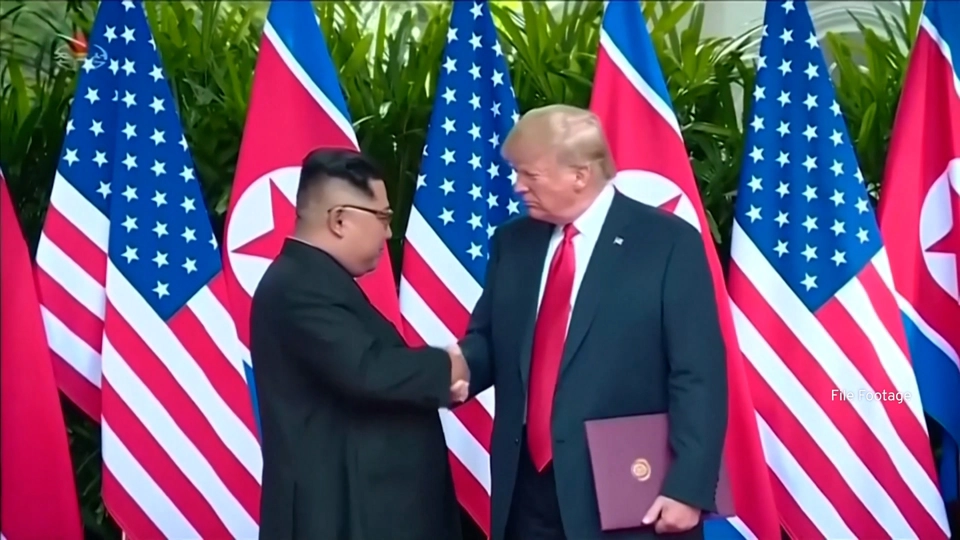 03:09
03:09