Top defense officials from around the world meet in Singapore for the annual Shangri-La Dialogue.
The summit, held by the London-based International Institute for Strategic Studies, is a space for major powers to have conversations and issue warnings.
In a keynote speech, Vietnamese President To Lam called for the enforcement of international law to confront global challenges.
To Lam (VIETNAMESE PRESIDENT):
We recognize competition as inevitable, but it must be within the bounds of the law, transparency, and self-restraint. Today's global crisis is not an inevitable consequence that we are forced to accept.
Meanwhile, US Defense Secretary Pete Hegseth again called on US partners in the Asia-Pacific to put more money and effort into their own defense.
Pete Hegseth (US DEFENSE SECRETARY):
For too long, the security of this region has rested disproportionately on American military power. While many of our allies and partners allowed their own defense capabilities to atrophy.
The US is pushing several regional partners—including Taiwan—to boost their defense spending.
Still, when answering questions after his speech, Hegseth said future arms sales to Taiwan would depend on US President Donald Trump.
Hegseth’s comments come just weeks after Trump framed these sales as a negotiating chip with China after his own summit with its leader Xi Jinping.
Despite this, China’s presence at the Shangri-La summit was low-key, with Beijing only sending lower-level representatives from its National Defense University and navy instead of its defense chief.
Some say Beijing may have missed an opportunity.
Richard Marles (AUSTRALIAN DEFENSE MINISTER):
We've also seen China engage in the biggest conventional military buildup in the world since the end of the Second World War, and that has not happened with a strategic reassurance for other countries, and again, that's a point that we make to China when we meet with China. All of that, I guess, highlights how important it is to have opportunities for dialogue.
Be it tensions in the South China Sea, the Taiwan Strait or between the two Koreas, the Asia Pacific presents numerous security challenges, and its governments don't often see eye to eye. And while events like this one in Singapore provide a venue for discussion, it's not always clear whether dialogue alone can make a difference.
 03:29
03:29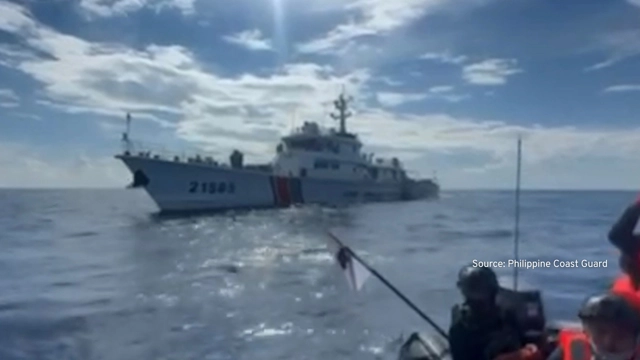 00:54
00:54 03:28
03:28 02:51
02:51 02:34
02:34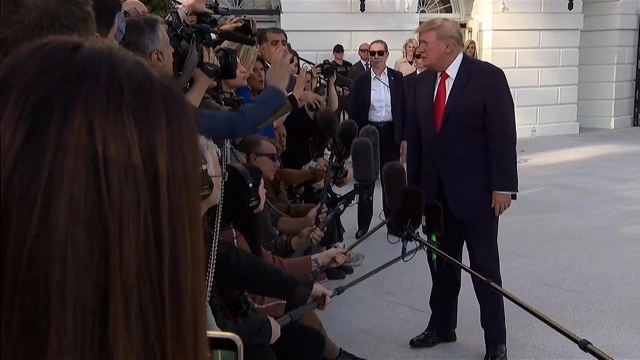 00:26
00:26 01:54
01:54 00:22
00:22 00:35
00:35 00:51
00:51 02:54
02:54 00:37
00:37 02:09
02:09 02:53
02:53 03:19
03:19 00:36
00:36