Sanja Matsuri: Tattoos on Display at Tokyo’s Famous Festival
REPORTER:
It’s one of Japan’s great Shinto festivals — and a familiar signal to the people of Tokyo that summer’s about to start. This is the Sanja Matsuri — held this year from May 15–17, a vibrant celebration marking the founding of a Buddhist temple, with over 700 years of history. And, for Japan, it’s a bit of an unusual event.
REPORTER:
Because of this. And this. And this.
REPORTER:
Japan is a country with a fairly strong aversion to tattoos going back centuries, as one festivalgoer explains.
Nakayama Noboru (FESTIVAL ATTENDEE):
A long time ago, as far back as the Edo period, criminals were associated with tattoos [in Japan].
REPORTER:
Yet Japan also has a rich artistic history of irezumi — as traditional tattoos are known. And while ink isn’t the point of this festival, here, they are tolerated. People proudly show off intricate designs all over their bodies — a rare opportunity.
Oyama Masaki (FESTIVAL ATTENDEE):
I try not to show them while I'm at work to avoid any trouble for my company, so I make sure they don’t show. Even on my days off I wear long sleeves. It's not like I'm consciously trying to hide anything in particular, but I've been doing it for so long, that's just how it is.
REPORTER:
Police look on but nobody says anything, as, for three days, the festival goes on just like any of the others that fill Japan’s calendar. And despite the bad rap tattoos have, some people here think they’re just fine.
Aratashi Akinori (FESTIVAL ATTENDEE):
Tattoos are a way for me to express myself.
REPORTER:
And as tatted Tokyoites let loose, it’s also a chance for visitors to Japan to see another side of local culture — something that can be both stigmatized and celebrated.
 02:15
02:15 03:07
03:07 03:25
03:25 03:01
03:01 00:42
00:42 00:30
00:30 02:42
02:42 02:54
02:54 03:24
03:24 02:06
02:06 00:32
00:32 00:29
00:29 00:30
00:30 03:50
03:50 03:09
03:09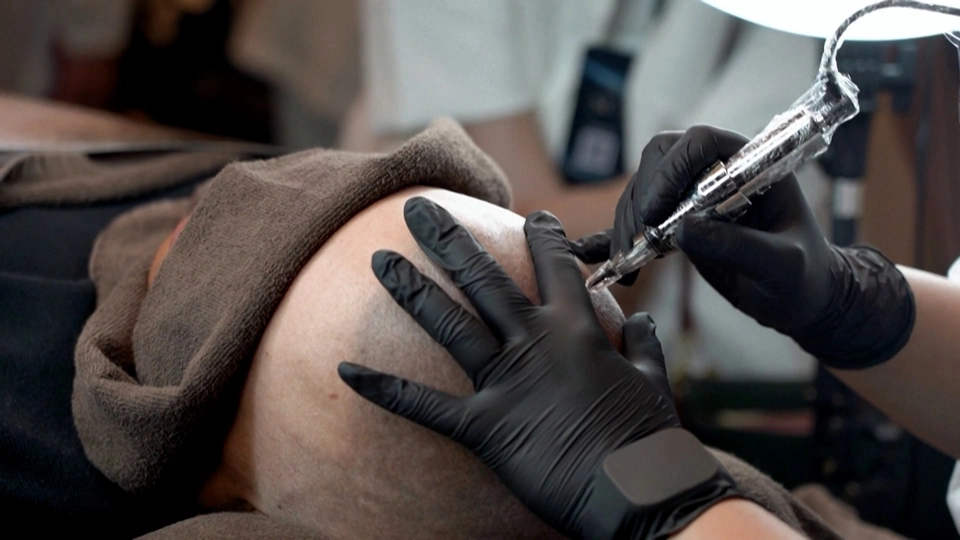 04:36
04:36