Balikatan Exercises 2026: Japan’s Role and Strategic Implications
---
REPORTER:
What does Japan's participation in this exercise say about Tokyo's efforts to change its defense policy and security arrangements?
Guermantes Lailari (RETIRED US AIR FORCE OFFICER):
Japan has actually been doing this for several years. It's not just during the current Prime minister Takaichi's term. We all know that at a minimum, the US and Japan have an alliance since 1951 and the Quadrilateral Security dialog of 2007. But since, um, let's say in the last five or 5 or 6 years, Japan has become sort of like a new mini hub and spoke country for the Indo-Pacific region, where it set up reciprocal access agreements and acquisition and cross service agreements with many, many countries.
What we see here is now a sort of like a another big step for Japan because Japan has never deployed. Uh, first of all, in this exercise ever, that's been an observer for many years, but, um, one, you know, 1200 or so troops, uh, involved in this exercise, first time ever.
---
REPORTER:
We’ve seen a sharp deterioration in relations between China and Japan, with Beijing issuing statements warning of what a militarized Japan could do to its neighbors. How do recent actions and participating in these drills contribute to those tensions?
Guermantes Lailari (RETIRED US AIR FORCE OFFICER):
I wouldn't say it's a deterioration of Japan, China relation. I would say it's the it's the pushback that China is doing because it doesn't like it when countries around it are allying with themselves because of China's aggression in the region. China has been very aggressive in the South Sea, in the East Sea.
So it's not that Takeuchi created this tension. It's China creating the tension that Japan is responding to.
So Japan's big rearmament, right? We're talking about 2% of its GDP and China is spending 7% of its GDP. So it's not again, it's not Japan's massive rearmament, its response to China's massive rearmament that's been going on for 25 years.
China is responding not just in the verbal or in the sort of the information space. They are actually doing things right now. They had a ship cross in the Straits into the Pacific, uh, demonstrating that they can punch through the first island chain, uh, missiles firing over, over Japan. Uh, just before the exercise started, Russian ship, uh, aircraft floating around Japan's airspace. These are all in response to Japan's willingness to get more involved in the defense of itself and also its neighbors.
---
REPORTER:
What value do multilateral exercises such as this one have for Japan and like-minded countries?
Guermantes Lailari (RETIRED US AIR FORCE OFFICER):
This is a very important exercise because it's the first time that Japanese and Filipino and American and a several other countries are participating in a, in a exercise that level sets, um, uh, tactics, techniques and procedures, not just for war, but also humanitarian and disaster relief, uh, for logistics, uh, for, and on the military side, amphibious operations, missile defense. These are all, in effect, really defensive exercises dealing with the threat that China poses and not just to Japan.
So there's a lot of things going on here where everyone has to understand what their role is, how to make sure that they work together, avoid fratricide and you know, achieve the maximum results possible based on their capabilities and the capabilities of others.
 02:15
02:15 03:07
03:07 03:25
03:25 03:01
03:01 00:42
00:42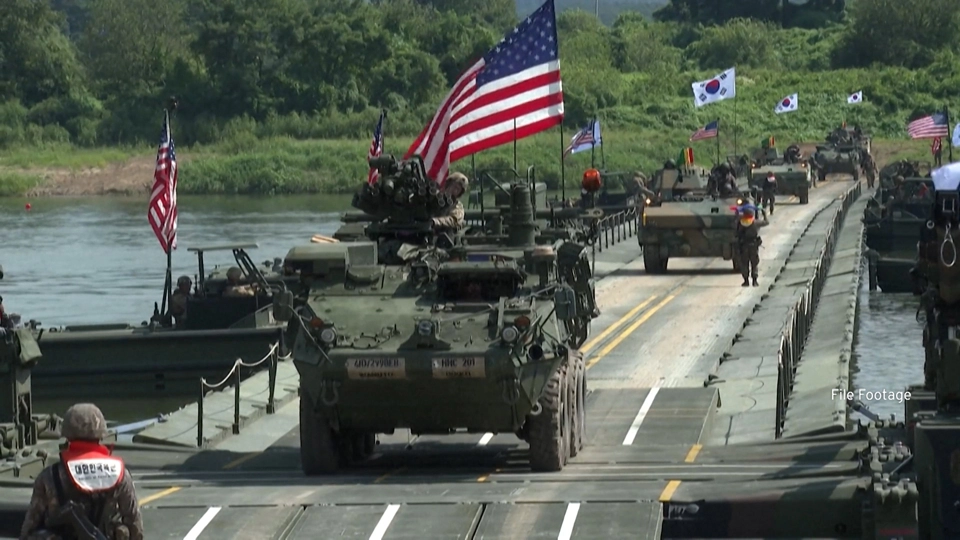 00:30
00:30 02:42
02:42 02:54
02:54 03:24
03:24 02:06
02:06 00:32
00:32 00:29
00:29 00:30
00:30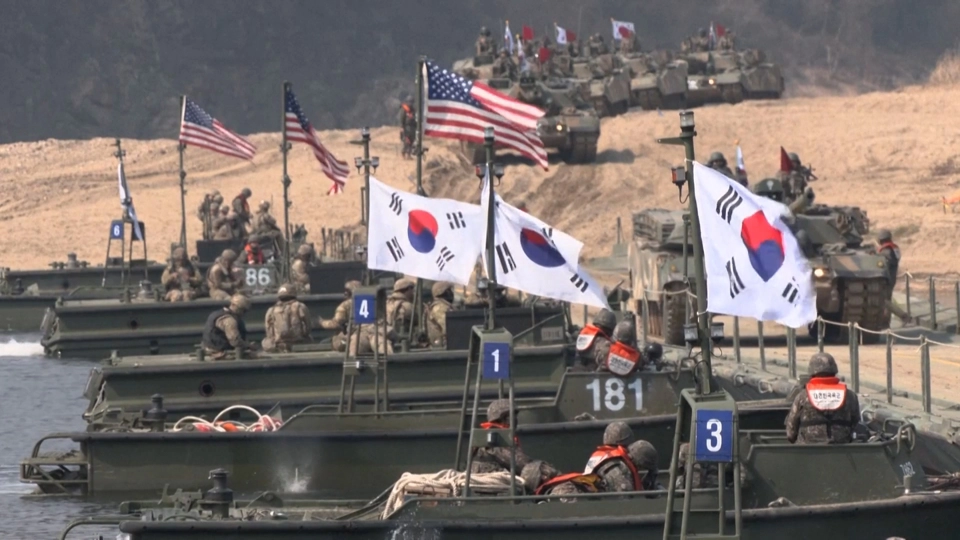 03:50
03:50 03:09
03:09 04:36
04:36