Starship Makes History
SpaceX sticks the rocket landing in front of cheering crowds
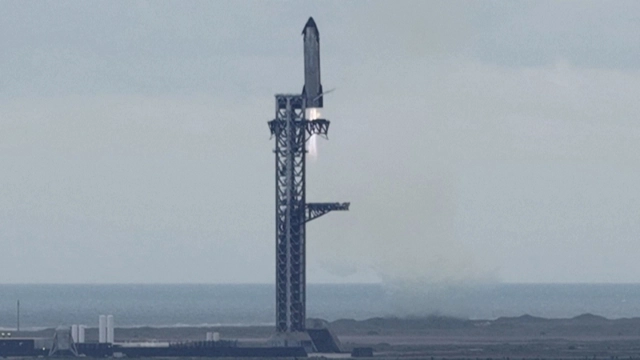
SpaceX has nailed its first attempt to catch its Starship spacecraft in flight.
The firm's 52-meter Starship orbited Earth 14 times before re-entering the atmosphere on Saturday. It then flipped upright and was grabbed by the launch tower's Mechazilla arms. The flight wasn't a total success—the rocket's lower booster failed to land 10 minutes after launch on Friday—but onlookers in Texas cheered as the spacecraft came in.
REPORTER:
"That catch, it was incredible. I am ecstatic to have been here today to see this happen. I'm super excited for SpaceX and thrilled to see what they do going forward with the ship."
NASA has a four-billion-dollar contract with SpaceX to land astronauts on the moon using Starship starting in 2028.
SpaceX caught its Starship spacecraft mid-air using giant mechanical arms at its Texas launch tower after a 22.5-hour trip in space. This is a major step toward building a fully reusable rocket, even though the rocket's bottom booster failed to return during the same flight.
A First-Time Catch: After orbiting Earth 14 times, the 171-foot Starship flew back into the atmosphere, flipped upright using its engines, and was grabbed by the launch tower’s Mechazilla arms.
Wins and Losses: Starship finished its longest flight yet and released 26 Starlink satellites into orbit. However, the rocket's lower booster failed to land 10 minutes after Friday's takeoff, keeping SpaceX from recovering both halves of the rocket in one trip.
The Path to Full Reuse: SpaceX wants Starship to fly and land as quickly and easily as a commercial airplane. Catching the ship is a huge step, though engineers still need to improve its heat-shield tiles so they don't need major repairs after every flight.
Big Goals and Costs: SpaceX has spent over $15 billion on Starship to launch Starlink satellites, build space data centers, and eventually send people to Mars.
Moon Landing Plans: NASA has a $4+ billion contract with SpaceX to land astronauts on the moon using Starship starting in 2028, though SpaceX still has to master complex tasks like refueling the ship in orbit first.
 01:02
 00:34
 00:44
 00:43
 02:36
 01:41
 00:31
 00:40
 03:03
 03:30
 02:32
 04:11
 03:18
 00:34
 05:24
 00:37