Tensions in the Strait of Hormuz
REPORTER:
It’s a beach day here in Bandar Abbas, Iran—a port city in one of tensest parts of the world.
REPORTER:
As people stroll across the sand and take in the view, the ships at a standstill in the distance are a reminder of a war with the US that has stopped traffic through the Strait of Hormuz. A ceasefire has not eased the economic pain: the blockage has cut the world off from a fifth of its oil and gas supply.
Mr. Mohammadzade (RESIDENT):
It’s really hard. People are really suffering and struggling. Right now, pretty much anything you want isn’t easy to find. And even if you can find it, it’s so expensive that people’s purchasing power has really weakened. The situation is not good.
REPORTER:
There is some cause for hope, though.
REPORTER:
US President Donald Trump says a deal is in the works, though not yet complete—and that he won’t be rushed into anything.
REPORTER:
And, on a trip to India in recent days, his secretary of state, Marco Rubio spoke of progress on talks with Iran. But there are still fundamental disagreements.
REPORTER:
The US says its goal with this war is to stop Iran getting nuclear weapons. Iran says it never sought anything more than a civil nuclear program. And then there’s the sharp difference over what’s next for the Strait of Hormuz. The US says Iran cannot be allowed to keep up its limits on shipping.
Marco Rubio (US SECRETARY OF STATE):
They don't own it. It's an international waterway. And what they are doing now is basically they are threatening to destroy commercial vessels using an international waterway. That is illegal under any concept of international law that governs us
REPORTER:
On Sunday, though, a military adviser to Iran’s supreme leader said Iran has a legal right to manage the key waterway for national security and threatened consequences if the US tries to force its way into the strait.
Gen. Mohsen Rezaei (IRANIAN MILITARY ADVISER):
If you decide to attack the Strait of Hormuz and enter the Persian Gulf, first of all you will face an exceptionally difficult and painful response. Secondly, we will break the naval siege that we have been patient with so far and have not attacked you. But more importantly, I tell you that we may withdraw from the Treaty on the Non-Proliferation of Nuclear Weapons.
REPORTER:
Iran has other demands too: an end to the US counter-blockade on its ports and the lifting of sanctions on sales of Iranian oil. It's unclear how far the US is willing to go to meet these demands.
REPORTER:
Back in Bandar Abbas, the Iranian port city, views are split.
Mr. Azarazin (RESIDENT):
Now that the Strait is closed, it's good, the working conditions and business are stagnant, but it's better, Iran has the upper hand, it's better.
Payam Ahmadi (RESIDENT):
One way or another, the US wants to reopen the Strait of Hormuz and completely take uranium enrichment away from Iran, and I doubt Iran is willing to give such concessions to the United States.
REPORTER:
But with any agreement between Iran and the US vague on details, and Iran’s foreign ministry saying they are “both very close and very far” from a deal, it’s unclear how long this stalemate will go on.
 03:23
03:23 00:42
00:42 00:48
00:48 00:40
00:40 02:56
02:56 03:24
03:24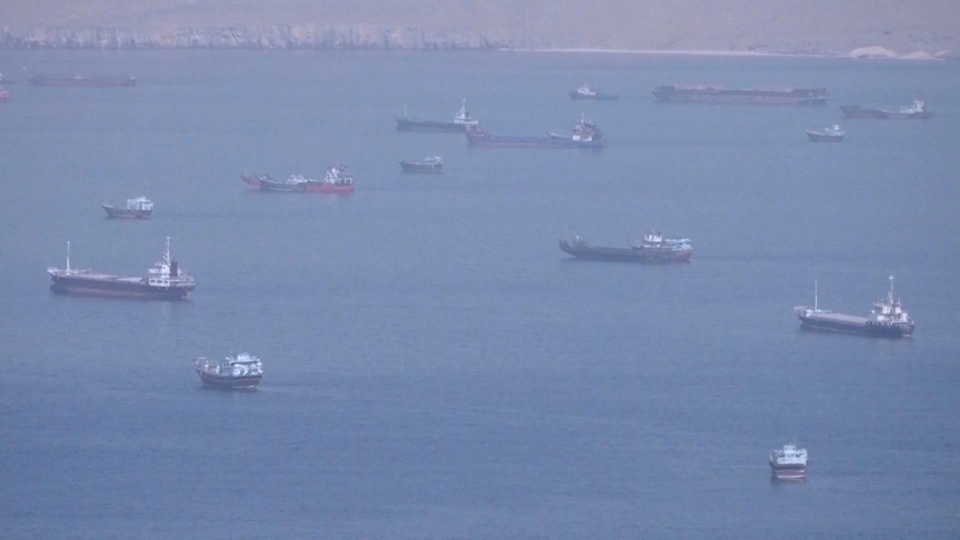 00:30
00:30 02:36
02:36 00:23
00:23 00:33
00:33 03:09
03:09 04:06
04:06 00:39
00:39 00:36
00:36 00:25
00:25 00:22
00:22