Analysis: How Is Anthropic's Mythos Changing How Policymakers Think About AI?
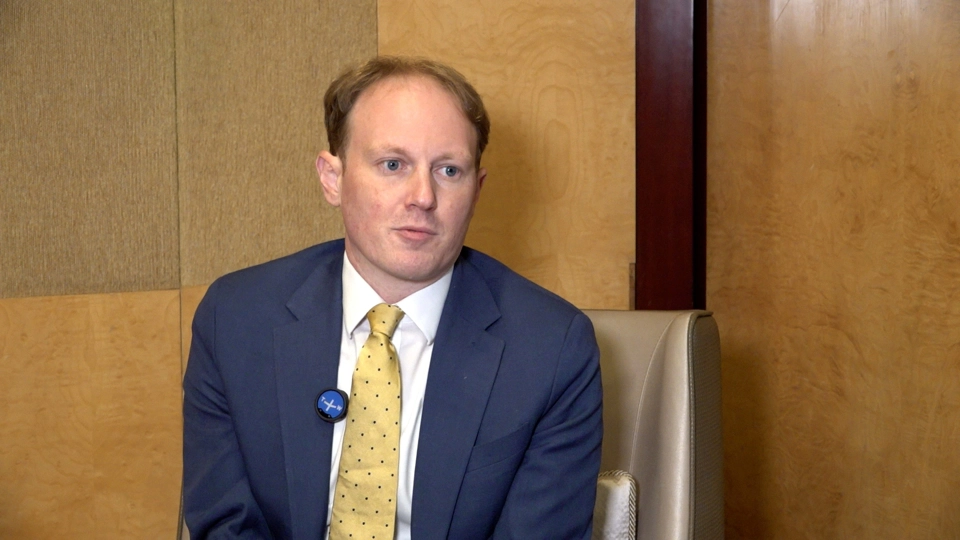
In this exclusive interview, TaiwanPlus spoke to Chris McGuire, former deputy senior director for technology and national security at the US National Security Council, on how Mythos — Anthropic's powerful AI model — is forcing governments to rethink AI policy. He also discusses the role of the private sector in shaping national security policy, especially when commercial and security interests don’t align.
ANCHOR:
Artificial intelligence is taking center stage at the Research Institute for Democracy, Society, and Emerging Technology’s annual forum in Taipei.
The event comes as demand for artificial intelligence is driving record investment in advanced semiconductors, and governments are increasingly treating technology as a national security issue. Reporter Lily LaMattina was at the forum, and spoke to one of the speakers, Chris McGuire. He’s a former deputy senior director for technology and national security at the US National Security Council.
INTERVIEW
REPORTER:
During your tenure at the National Security Council at the White House, you crafted the Biden administration’s technology protection strategy, including export controls. Do you think the current Trump administration’s approach is headed in the right direction?
Chris McGuire (FMR. DEPUTY SENIOR DIRECTOR FOR TECH & NAT. SECURITY, US NATIONAL SECURITY COUNCIL):
The answer is clearly no, that the policies that they've taken have been to largely walk back controls, and certainly not to close loopholes in controls and continue to move the ball forward. So that has been very problematic. And that's why you've seen the policy of sending AI chips to China. That has profoundly complicated debate on an issue that was largely settled several years ago. It's why you see pervasive smuggling. It's why you see the remote access problems that we're seeing. So I think the not addressing these has been problematic.
Now, what I will say is I think that mythos has very profoundly changed the conversation in Washington on AI. It has not yet manifested in terms of controls and in terms of new measures or things like that. But that said, I think the administration is now taking very seriously the idea that we have to have regulations around AI. And I think before mythos, the idea was just deregulate everything. Export controls domestic policy. Just let the private sector rip.
REPORTER:
You said export controls are the only tool to slow China’s AI progress. But major tech executives, like Nvidia CEO Jensen Huang, have criticized these policies. How should we think about the role of the private sector in shaping national security policy, especially when commercial and security interests don’t fully align?
Chris McGuire (FMR. DEPUTY SENIOR DIRECTOR FOR TECH & NAT. SECURITY, US NATIONAL SECURITY COUNCIL):
If you just took the approach of anything that hurts an American company is therefore by definition bad for America, you would have no export controls, and that does not work. It's very clear that there are certain technologies that we don't want to go into adversaries hands, and we just have to accept that certain costs are actually worth bearing for national security benefit. And therefore, the economic interests of the company are not always going to align completely with national interests.
I would also note that export controls have actually been really beneficial to Nvidia in the past. The fact that that, um, Smic doesn't make chips that compete with TSMC is largely because of US export controls on EUV. The fact that Huawei doesn't make chips that that that compete with Nvidia is because the United States blocked Huawei from manufacturing at TSMC.
Nvidia sells every single chip that they make. So it's not like more sales to China are actually helping them sell more chips because Jensen Huang will say everywhere he goes that chips are sold out.
They want to have a more diverse customer base. And the only place they can diversify is in China. The problem is that's not in America's interest. To allow them to do that. They want to effectively de-risk from the American market, but it's not in the American government's interest to permit that. He doesn't make this argument, because I think it would be politically unpopular, but it does explain why there's a legitimate business interest for them selling to China.
REPORTER:
Anthropic has described its model—Mythos—as too dangerous for public release, and is instead providing limited access to select companies. Should that kind of early access also extend to other critical stakeholders, like the Taiwanese government or semiconductor companies, given their role in the AI ecosystem and supply chain security?
Chris McGuire (FMR. DEPUTY SENIOR DIRECTOR FOR TECH & NAT. SECURITY, US NATIONAL SECURITY COUNCIL):
I think ultimately you will see probably some kind of tiered approach, just generally speaking, in terms of model access, where you'll have the most advanced models second, most, third, most probably, we're not going to see the most advanced models publicly released anymore going forward, I don't think. But regardless. Yes, absolutely. The United States and Taiwan should cooperate on with advanced AI models. TSMC should be integral to that. And also, the Taiwanese government and Taiwanese companies need to make sure that they are doing their utmost to make sure that there that those models and that technology is protected and it is not become some kind of pass through to China or others.