A drone lifts off from Hualien in eastern Taiwan, carrying a precious cargo of seeds and young plants.
It doesn’t take long to reach its target: a moonlike landscape devoid of all vegetation even a year after disaster struck. In September last year, a barrier lake created by a landslide overflowed. Floodwaters slammed into nearby communities, killing at least 19 people and leaving some missing whose remains have never been found.
This drone mission’s goal is to bring back plant life, reaching rugged places humans would have a hard time getting to. The payload of seeds and plants is specially wrapped to give it the best chance of survival.
CHUNG CHI-HSIN, NAT’L ILAN UNIVERSITY:
"For seeds to sprout, they need moisture. We provide the moisture they need during sprouting successfully incubating them into seedlings in the best conditions possible."
It’s still too early to see results but hopes are high at the forestry agency and National Ilan University, who are running this project together. Already, they’ve dropped seeds on an area of just over 40 hectares.
CHU YI-CHIEN, FORESTRY AND NATURE CONSERVATION AGENCY:
"The end goal is to reduce surface erosion and the risk of soil and rock coming down [the slopes] in order to reduce the risk of a [new] barrier lake."
But even a year on, “new life” is something hard to imagine for many living nearby, especially farmers. The flood buried almost eight square kilometers of fields. The agriculture ministry is trying to help with recovery of land that’s still unusable.
TSAI YI-CHEN, MINISTRY OF AGRICULTURE:
"The area [we’ve helped with] now amounts to around 2.2 square km. But there is still around 1.4 square km where farmers will have to put in enormous effort and capital if they want to recultivate it themselves."
Recovery may be on the way for this mountainous corner of Taiwan, but it could take time and government help to clear out the last of the muck and bring back the green that last year’s flooding wiped away.
Devin Tsai and John Van Trieste for TaiwanPlus News.
 02:09
02:09 00:46
00:46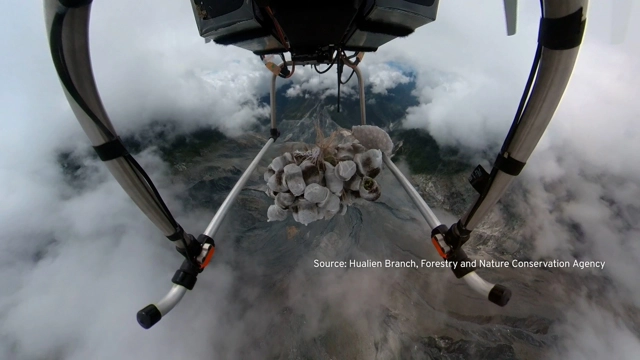 01:58
01:58 02:35
02:35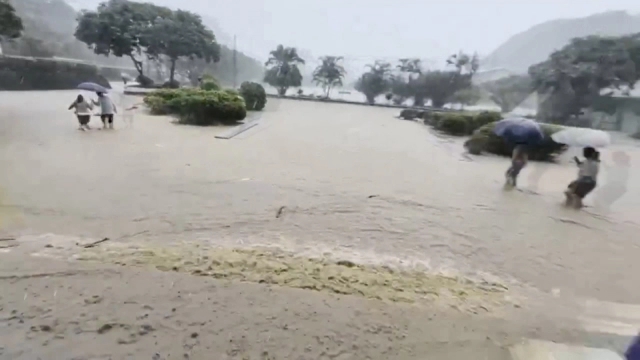 01:36
01:36 02:28
02:28 02:02
02:02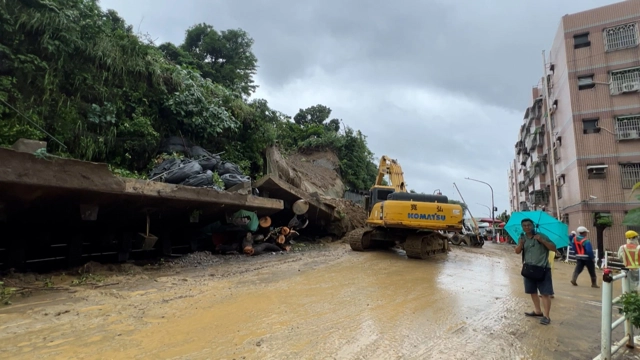 02:06
02:06 00:26
00:26 01:39
01:39 00:32
00:32 01:51
01:51 01:27
01:27 00:43
00:43 00:24
00:24 01:38
01:38