A rare glimpse into the daily life of a Formosan black bear living through winter dormancy...
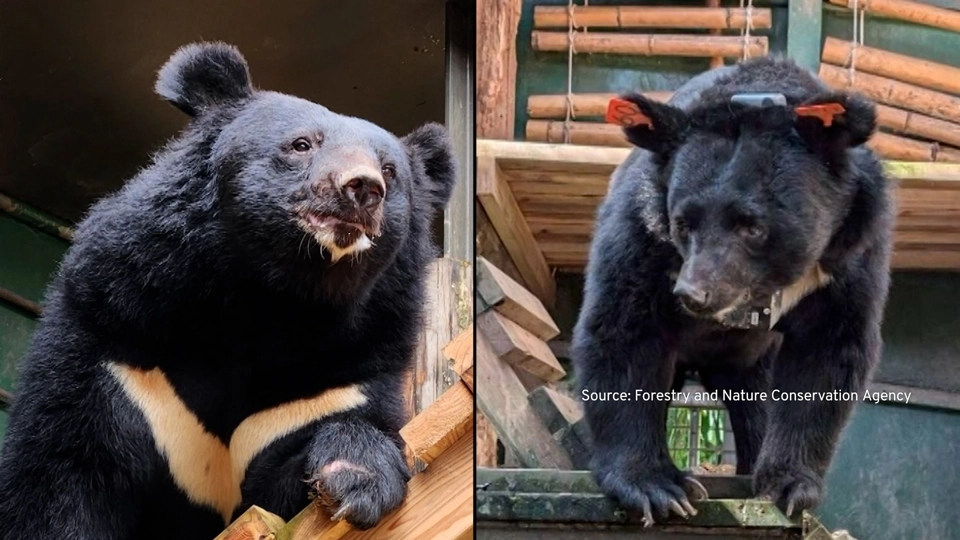
The videos... of two endangered Formosan black bears released back to the wild... each with a satellite-connected camera on its collar.
And a startling finding... the bears have been taking unusual routes... even entering one Indigenous village.
HO CHENG-CHUNG, SAIKU VILLAGE CHIEF:
"They’ve come to our village three times. I reported all three sightings to the authorities. The first time a bear came to our village it was looking for the chickens and ducks we raise behind the village. The second time was in a work shed in the mountains. The bear was lying on the mattress and a blanket almost like a human. We Bunun [Indigenous people] know that there’s a taboo against trapping and killing bears. We must leave as soon as we spot them."
Taiwan’s forestry agency estimates there are over a thousand Formosan black bears in the wild in Taiwan... an encouraging increase from some years before for this vulnerable species... But the number of bears intruding into human spaces is also rising.
One biologist says humans are precisely why bears are straying from their natural habitat...
Cameras have caught them tearing through plastic bags and eating leftover food scraps from lunchboxes…
LIN LIANG-KONG, CENTER FOR ECOLOGY AND ENVIRONMENT, TUNGHAI UNIVERSITY:
"Food is the major incentive. 80% of their food comes from humans’ food waste while the remaining 20% comes from unharvestable crops. Bears usually hibernate for three or four months or more sometimes even more than five months. But because of climate change their hibernation period has shortened. When they wake up, they’re hungry and go out to find food."
To stop bears from rummaging for food in human habitats... Authorities have sent out bear-proof dumpsters and put up electric fences to ward them off...
The forestry agency is also launching a bear reporting system for sightings and incidents of conflict with humans...
As global temperatures keep rising and the line between human and bear habitats blurs... officials hope to better prepare locals to coexist with these powerful predators.
 02:14
02:14 01:12
01:12 00:46
00:46 00:25
00:25 01:33
01:33 03:51
03:51 03:29
03:29 01:36
01:36 02:02
02:02 00:32
00:32 01:38
01:38 00:26
00:26 00:52
00:52 01:58
01:58 02:01
02:01 03:09
03:09