Hunting Cane Toads in Nantou: County Nears Historic Win in Eradicating Invasive Pest

REPORTER:
In Nantou County, a captured cane toad calls out from captivity — one of countless toads rounded up in a yearslong campaign against Taiwan’s invasive amphibian population.

REPORTER:
First sighted in 2021, cane toads likely made their way to southern Taiwan as pets that were later abandoned. They have since multiplied in the wild, threatening local biodiversity.

REPORTER:
Leading the eradication campaign is Yang Yi-ru of National Dong Hwa University, who has led thousands of shifts with volunteer toad catchers over a number of years.

Yang Yi-ru (ASSOCIATE PROFESSOR, NATIONAL DONG HWA UNIVERSITY):
From a peak of 35,000 caught in 2024
to just 54 adults between January and June this year
and with no juveniles found
this means the wild toad population
has shrunk dramatically.
We’ve set an example for the world
on how to bring an invasive species under control.

REPORTER:
Despite making a huge dent in the wild cane toad population, the campaign’s work is not yet finished and the local community remains vigilant of a resurgence.
A single female cane toad can lay up to 35,000 eggs a year — a reminder of how quickly the population could rebound.

Chen Ni-hsuan (LEAD COMMUNITY ORGANIZER):
We have caught almost all of them
but there are still eggs out there that could hatch and grow.
We still need everyone to work together
to protect our environment.

REPORTER:
Originally from Central and South America, the cane toad is a formidable species, two to three times larger than Taiwan’s native toads, they can measure up to 15 to 20 centimeters in length. The species has become a notorious invasive pest in a number of countries, notably Australia.
The government has taken steps to prevent abandoned pets from becoming the next crisis.

Yang Man-lei (CONSERVATION CHIEF, NANTOU FORESTRY BRANCH):
Regulations now prohibit keeping and breeding them
they are no longer being imported as pets
and violators face fines.

REPORTER:
Meanwhile, public, private, and academic sectors are continuing to work together for a final push to eradicate cane toads — setting a global precedent along the way.
 01:30
01:30 00:47
00:47 02:14
02:14 01:12
01:12 00:46
00:46 00:25
00:25 01:33
01:33 03:51
03:51 03:29
03:29 01:36
01:36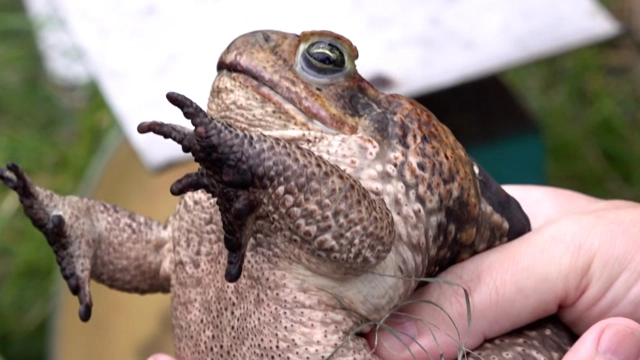 02:02
02:02 00:32
00:32 01:38
01:38 00:26
00:26 00:52
00:52 01:58
01:58