This AI-generated summary is based on reporting by TaiwanPlus and verified by newsroom fact checkers. Learn more about our policy here.
Former Taiwanese foreign minister David Lee, a veteran diplomat who has navigated the complexities of international relations for four decades, has released a new book, “Composure Amidst Turmoil," offering a candid look at his extensive career. The book reflects his personal philosophy and the challenges he faced in a role vital to Taiwan’s global standing.
Lee, who also served as secretary-general to President Tsai Ing-wen and on the National Security Council, discussed his insights in a recent interview. He explained that the book's title reflects his four-decade-long public career, in which he maintained composure through the repeating challenges of a diplomat's career.
He defined diplomacy as an art, not a science, focused on conducting foreign relations to best serve national interests. He emphasized that diplomacy involves negotiation and reconciliation, while humorously adding that some diplomatic work remains undisclosed, not even appearing in his book.
Lee expressed a preference for the term "progress" over "breakthrough" when describing Taiwan's diplomatic achievements. He explained that he would only consider a true breakthrough to be Taiwan's invitation to join the G20 or gaining membership in the United Nations. However, he clarified that Taiwan had made "progress" in its foreign relations. He cited instances of progress, such as the establishment of offices in Canada in 1991, followed by Australia, and Canada granting visa waivers to Taiwanese passport holders in 2010, which the United States adopted two years later.
For Lee, a successful diplomat requires both "book smarts" and "street smarts." He asserted that while academic knowledge is a basic requirement, true success in diplomacy also demands "street smarts" — an abstract ability to intuitively understand what is happening and "smell what's going on" in interactions with foreign leaders or officials.
Lee illustrated this with an anecdote about an ambassador who failed to build rapport due to formality, contrasting it with a successor who connected with a foreign leader by adapting to local customs, even working in the fields alongside the president of his host country in casual attire. He noted that this approach fostered a strong relationship, which he found crucial for sustaining diplomatic ties through genuine rapport.
In retirement, Lee says his life is very different, highlighting his newfound freedom to turn off his cell phone and travel abroad without professional obligations. He no longer has to worry about phone calls interrupting his sleep or golf games. He also prioritizes maintaining his physical fitness.
 14:48
14:48 14:47
14:47 14:48
14:48 14:48
14:48 14:48
14:48 13:39
13:39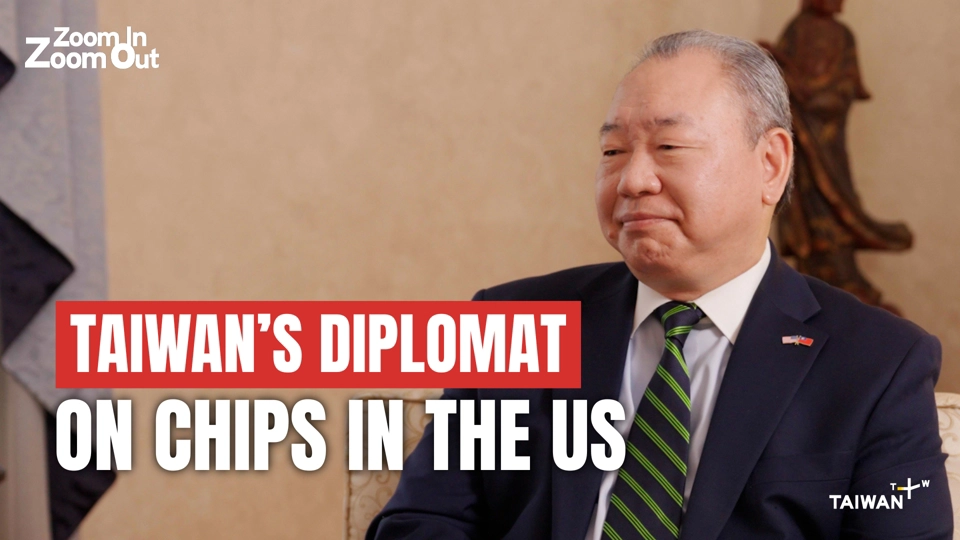 14:49
14:49 14:48
14:48 13:43
13:43 14:07
14:07 14:18
14:18 14:47
14:47 14:48
14:48 14:17
14:17 14:51
14:51 14:53
14:53