Palauan President Whipps on Taiwan's Role in the Pacific Islands Forum
REPORTER:
Taiwan's Foreign Minister Lin Chia-lung is leading Taiwan's delegation to PIF this year after Taiwan was excluded from last year's forum. What led to the decision to invite Taiwan at this level, and what does its participation mean for Palau?
Surangel Whipps Jr. (PALAUAN PRESIDENT):
Well, I think, first of all, what we need to understand is that all countries were all partners were not allowed to attend the forum last year. But we made it very clear that as host of the 55th forum, that we wanted to be, uh, follow the guidelines of the forum, which invites all partners. And Taiwan is a development partner of the forum. I tried inviting the highest level of every partner to come to Palau. In fact, I tried inviting presidents, prime ministers of those countries like Japan, like others, to come to Palau because we want the highest level representation. It's important that our partners understand how we can work together to build a resilient and prosperous Pacific. So. We're grateful that Minister is able to come and join us in Palau.
REPORTER:
As the host of this year's forum, how have you managed pressure from China over Taiwan's participation and more broadly, China's efforts to influence the bloc and its decision making?
Surangel Whipps Jr. (PALAUAN PRESIDENT):
China continues to say that we need to follow the "one China" principle. And I think that is something that continues to be something that they want to say. But we have to respect that we are all sovereign nations that make up the forum. We have our relationship with our partners. There's a dialogue partners, there's development partners, they are all partners and they are all allowed to participate in different ways. And we respect those rules and we should uphold those rules. Uh, one thing that you should be understood is that Taiwan not only is a development partner, they also fund the forum. They provide funding for the operations of the forum. Taiwan was one of the first that pledged to contribute to the Pacific Resilience Facility, which is for all of the Pacific. Uh, so and Taiwan has been an active participant of the forum since [1993]. So we are just following what has always been practiced.
REPORTER:
PIF is for the Pacific Islands to sort of, you know, have a space to discuss the issues that matter the most to them. But often, sometimes the involvement of these external partners can also bring in some wider geopolitical conflicts. So what does it mean to you that the Pacific is increasingly a focal point for these competing interests?
Surangel Whipps Jr. (PALAUAN PRESIDENT):
You know, I think that's really important. We are here to hear from our partners of how we can work together and cooperate to build a prosperous and resilient Pacific. That's why the partners should be here. Their politics and their global issues are their issues. And so we shouldn't let those detract from our desire to address the challenges that we face as a Pacific.And I think one of the things that we've seen over the years is that the form has developed into really a priority for all leaders. We've seen the highest attendance rates in these forum meetings. So I think we've learned to manage, and I think that's one of the things that was clear last year. And you know, I support Solomon Islands decision at the end to say nobody comes because we don't want the noise to affect our decision making process, what our priorities are. And I think one of the challenges this year is to make sure that the noise focuses. If there is noise, it's about Pacific issues, Pacific priorities, and how we work together to develop a prosperous and resilient Pacific.
REPORTER:
Do you feel like the pressure this year is different from before? Or do you think it's pretty much the same.
Surangel Whipps Jr. (PALAUAN PRESIDENT):
It's absolutely there. Okay. Um, China continues to try to influence us, whether it's threatening us with weaponizing tourism or, or attacking us personally. Uh, that's, that's how far China goes. And it's unfortunate because, uh, we should respect rule of law, we should respect consensus, we should respect each country's sovereignty. And, uh, I think that's, that's what we promote. Uh, so it is unfortunate that, that this is the tactics that they use. But I think what's most important is, is that, uh, all partners respect the forum and the rules that guide the forum. Uh, and that includes China.
REPORTER:
What are some of the most significant ways that you've seen China's influence grow across the Pacific? And I know that China is also a big trade partner development partner for Palau. So how do you balance that relationship with China with your long-standing relationship with Taiwan?
Surangel Whipps Jr. (PALAUAN PRESIDENT):
China is the number one exporter to the world. The United States, even Taiwan, everybody buys products from China. So we all I mean, that's that's how global trade works.
When it comes to economic cooperation, there is no hindrance to that because that's how things operate. Uh, there is no hindrance with engaging with China. It's China that doesn't want to engage with Palau. Right. Uh, that because of our relationship with Taiwan, and we've made that very clear from the beginning that nobody is going to tell us who our friends can be. We have diplomatic relations with Taiwan. We will continue to have diplomatic relations with Taiwan. But if other countries want to have diplomatic relations with us, they don't tell us we can't have diplomatic relations with Taiwan.
But I think one of my first visits to Taiwan, I used a term that a lot of times, we get sweet talked, so we get told, oh, you know, you're you're a smart businessman. You know what's good? We can give you a million tourists and build all the infrastructure that you need. Just switch today. And, and then if that response is not a yes, then they say, well, we'll beat you tomorrow. We'll stop tourism, we'll stop trade, we'll stop whatever. And you know, that's, that's not the way we should operate as global citizens. We should respect each other. We should try to work together for the benefit of all humankind.
REPORTER:
So I was wondering how you would assess Palau's cooperation with Taiwan on combating transnational crime rings. This was an initiative that was brought up during Vice President Bi-khim Hsiao's visit in June. Do you have any tangible results.
Surangel Whipps Jr. (PALAUAN PRESIDENT):
I know there's been at least two arrests in Taiwan of people that have left Palau and then returned to Taiwan. Yes, I do know that what's really important is that sharing of information and working together, and that's already begun. Um, but also putting bodies and working together and collaborating is critical. Because at the end of the day, uh, you know, the most important element into increasing investment, building economic activity is having a secure space to operate. So having transnational crime, drugs, these kinds of issues, they detract. They undermine economic development.
 03:43
03:43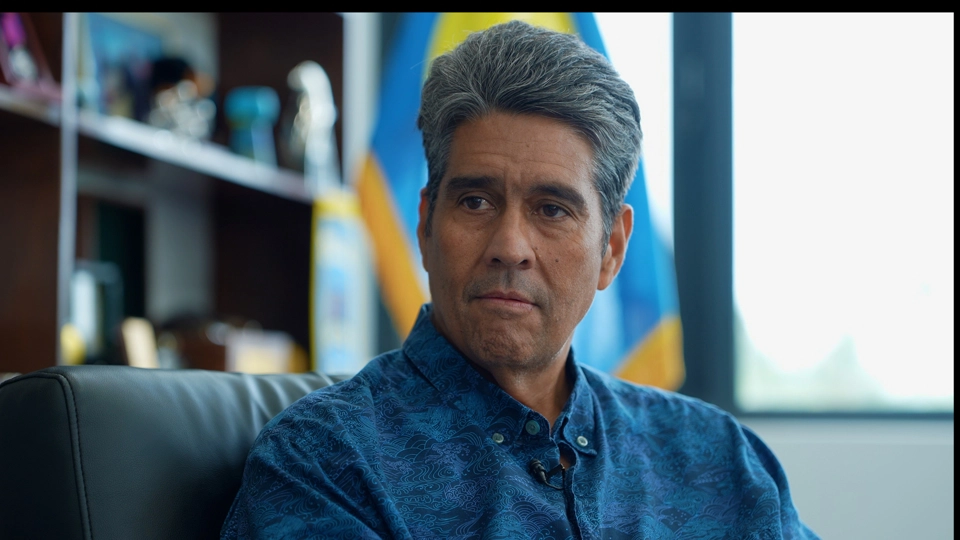 08:10
08:10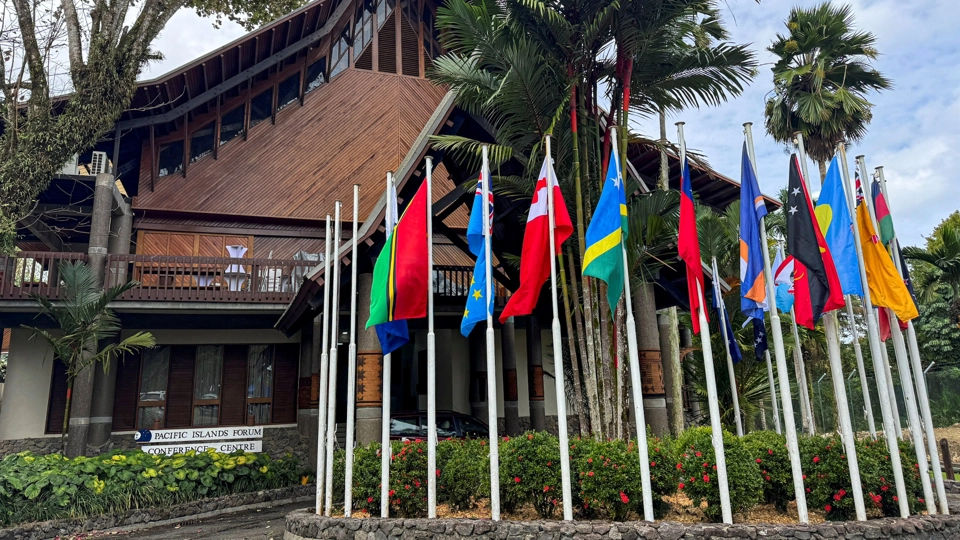 03:50
03:50 00:32
00:32 00:30
00:30 00:52
00:52 04:02
04:02 03:44
03:44 03:34
03:34 00:33
00:33 00:31
00:31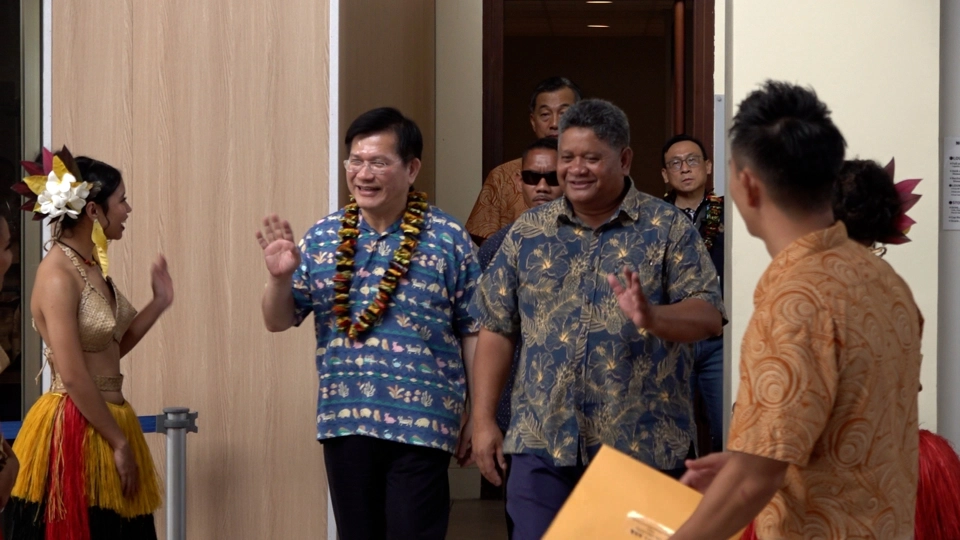 00:35
00:35 00:42
00:42 00:30
00:30 03:04
03:04 04:27
04:27