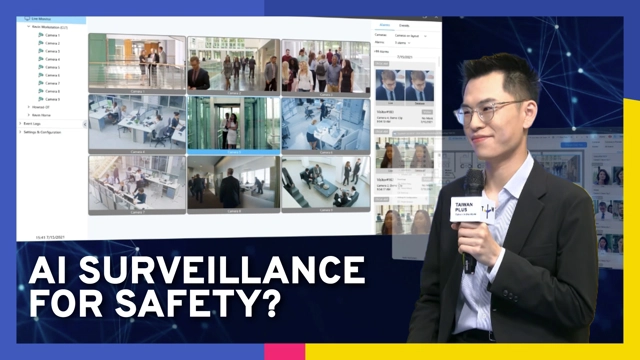
The deployment of artificial intelligence is transforming traditional surveillance into an active AI urban brain capable of predicting structural risks in real time. From stadium concerts to major sporting events, modern video management systems are shifting to proactive response ecosystems that orchestrate precision crowd movements based on mathematical vectors. What is the core operational logic required to scale these smart city frameworks without encroaching on human privacy?
In this COMPUTEX 2026 Special, we welcome Kuo-Ching Hsu, Business Development Senior Specialist from CyberLink, to deliver expert tech insights on next generation smart city governance. Hsu explains how advanced video architecture can analyze crowd pressure density and flow vectors to issue early warnings for stampede risks. He breaks down the strategic navigation required to capture crowd traffic flows while maintaining a localized layout that ensures sensitive data processing remains securely within national borders to prevent third party exploitation.
We also examine the practical execution of frontline privacy preserving technologies that safeguard personal identity before video feeds even enter the main infrastructure. Discover how CyberLink’s framework integrates local compute power with autonomous aerial corridors, allowing the system to deploy emergency medical drops via drones when ground routes face severe bottlenecks. Whether you want to understand Tokyo's disaster response protocols or Singapore's Smart Nation 2.0 blueprint, this exclusive interview provides the practical answers to achieving a future city where public safety and personal freedom coexist.
KEY HIGHLIGHTS:
THE EVOLUTION OF AI GOVERNANCE AND RISK PREDICTION
Global mega cities face immense infrastructure friction when managing large public gatherings. This segment analyzes how intelligent video nodes process massive visual data streams to map out optimal evacuation paths dynamically, moving the tech industry away from passive contract manufacturing and into standard definers of urban safety architecture that maintain user trust.
THE MECHANICS OF FRONTLINE PRIVACY ENGINEERING
Deploying a city wide digital brain carries heavy compliance responsibilities regarding data privacy. We unpack the specialized algorithms that mask personal identifiers at the edge, proving that municipal hardware can deliver comprehensive national security while respecting individual citizen liberties and minimizing corporate fixed costs.
SURVIVING UNCERTAINTY THROUGH LAND CORRIDORS
Navigating real world volatility during urban crises requires real time decision making. Hsu discusses how structural software integration allows a localized network to pivot instantly during logistical failures, coordinating automated land and air response assets when it matters most.
 12:51
 12:36
 12:01
 12:14
 12:51
 12:50
 12:46
 12:44
 12:50
 12:31
 12:51
 12:51
 12:45
 11:49
 12:51
 12:51