ANCHOR:
Hong Kong has become central to Iran’s network for evading international sanctions, according to a new report. To find out how deep those links go, our reporter Lily LaMattina spoke to Mark Clifford of the Committee for Freedom in Hong Kong Foundation.
REPORTER:
Your report contains significant evidence that Hong Kong is being used as a key hub in Iran’s sanctions evasion. How much do Hong Kong authorities know about this—and why hasn’t more been done to stop it?
Mark Clifford (PRESIDENT, COMMITTEE FOR FREEDOM IN HONG KONG FOUNDATION):
The government is clearly aware of it because it has not taken any meaningful action to enforce even United Nations sanctions against Iran. Uh, the Hong Kong government has made it very clear that it will not in any way help by unilateral American sanctions, but it hasn't even, uh, lived up to its responsibilities to enforce United Nations sanctions. I wouldn't say this is representative of the, you know, leading Hong Kong companies. This is mostly, uh, kind of the kind of in the weeds of the Hong Kong trading and financial system. But it's so easy to set up a company in Hong Kong. It's very easy to close one to that. It's just easy for these people who are living in kind of the dark edges of the global trading and financial system to not only survive, but to thrive in Hong Kong.
REPORTER:
Why does Hong Kong, in particular, remain attractive, compared with other financial hubs like Dubai or Singapore?
Mark Clifford (PRESIDENT, COMMITTEE FOR FREEDOM IN HONG KONG FOUNDATION):
Hong Kong had a 156-year legacy as a British colony, and it had, uh, increasingly good corporate governance, uh, especially in the, I'd say the last ten or so years of British rule. And much of that transferred over after China took control of Hong Kong in 1997. But the last 10 or 15 years, as China has become more authoritarian, uh, Hong Kong authorities have looked the other way when, um, people are engaged in dubious transactions. So, Hong Kong has a funny mix of being very tied into the global financial system, as a result of its more than a century of British colonialism. And at the same time as, I'd say gone to the dark side, become a kind of pirate entrepot. The wild, wild East, if you will. As a result of Chinese Communist complicity with authoritarian regimes like Iran, like Russia.
REPORTER:
Following the recent Trump-Xi summit, you say the US has tools it could have used to pressure China on Iran, including through Hong Kong. How much leverage does Washington actually have, and has it been used effectively in recent negotiations?
Mark Clifford (PRESIDENT, COMMITTEE FOR FREEDOM IN HONG KONG FOUNDATION):
Trump has a lot of leverage, the obvious one being trade and economic. But he does not seem to have pushed the Chinese as hard as I thought he could. Obvious place to start would be Hong Kong and tell him to shut down the Hong Kong nexus of helping it sell oil and then launder the proceeds and helping Iran, um, obtain critical weapons technology through transshipments.
The Chinese are providing intelligence to the Iranians. They're continuing to buy Iranian oil. There's talk that they are looking at providing the Iranians with arms through a third country. So, I mean, these are all pretty provocative actions by a country that claims that it's neutral and wants the conflict to end. Hong Kong is part of that.
 02:31
02:31 00:53
00:53 00:57
00:57 00:41
00:41 00:47
00:47 00:50
00:50 03:29
03:29 00:39
00:39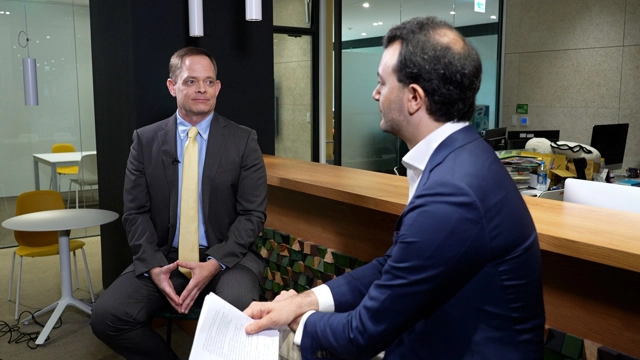 05:19
05:19 00:29
00:29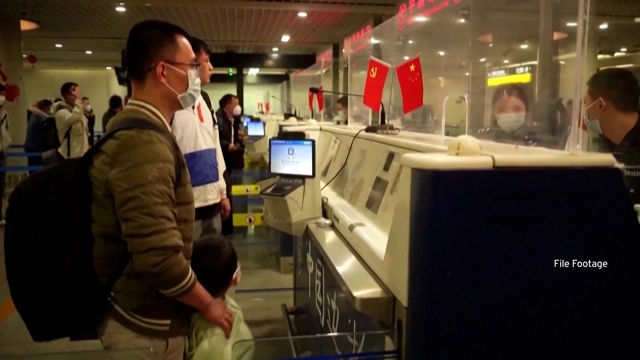 00:52
00:52 00:23
00:23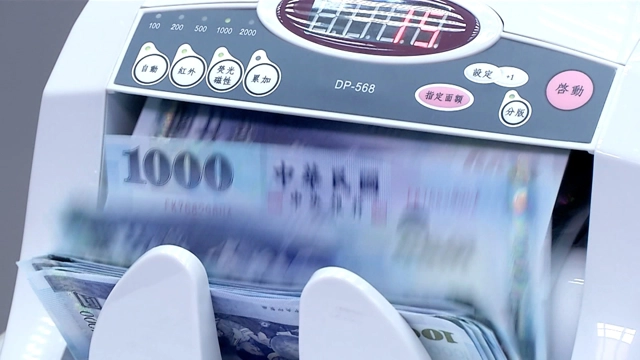 00:54
00:54 04:01
04:01 00:40
00:40 03:48
03:48