"You see this yellowed leaf. Panama disease makes the leaves turn yellow."
Banana farmer Yu Chih-jung recalls three decades ago... when most of his harvest was wiped out by a scourge that banana growers know all too well -- Panama disease.
YU CHIH-JUNG, BANANA FARMER:
"If 40% of the plantation’s bananas are lost this whole plot loses its commercial value. So back then, it was a huge blow to the industry."
YU CHIH-JUNG, BANANA FARMER:
"In my first year of growing bananas I saw 30% [infection rate] on my first field. Infection rate was hight back then and I didn’t know how to manage it."
Panama disease is caused by a soil-borne fungal pathogen that blocks nutrients... causing the banana plant’s leaves to yellow and the base of the stem to crack.
In the past, outbreaks of the disease have upended global banana production. Back in the 1950s, growers were forced to abandon the Gros Michel variety that was dominant at the time. They switched to the Cavendish cultivar, which was more resistant to the disease. And Cavendish has been the world’s main commercial banana variety since then.
But the cycle is playing out again – the Cavendish banana is under threat, vulnerable to a new strain of the Panama disease pathogen called tropical race 4, or simply TR4 – a strain that was first identified in Taiwan.
As a third-generation banana farmer in the southern county of Pingtung... Taiwan's largest banana growing area... Yu has spent all his years trying to control the disease on his farm... including redesigning the irrigation system.
YU CHIH-JUNG, BANANA FARMER:
"Before, we used flood irrigation. With flood irrigation, you can end up with certain areas getting a lot more water. As the water flows from higher to lower ground it carries the pathogen with it and spreads it faster."
YU CHIH-JUNG, BANANA FARMER:
"The infected area covers all of Taiwan. The only way to handle TR4 is to learn to live with it. There’s currently no way to eliminate it."
Ever since TR4 was identified in the late 70s in Pingtung… it has seriously affected banana plantations in Southeast Asia and increasingly in Latin America.
But now, one local research institute may have a solution.
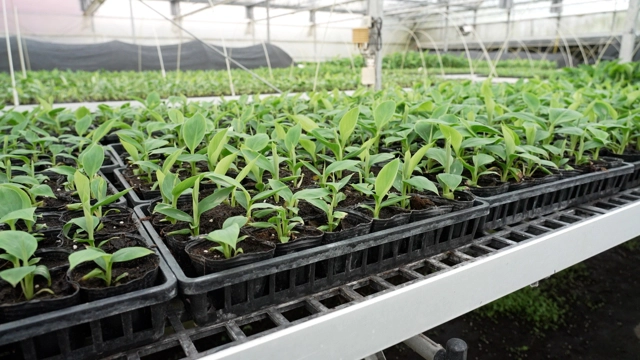
This is a banana plantlet cultivated at this Pingtung research lab. It’s a variety called Williams popular in Southeast Asia… and most importantly… it’s highly resistant to the TR4 fungus.
Me et Tai-chiao No.9... the first Williams variety in the world that’s resistant to TR4.
Researcher Su Yu-yen says it took the team five years and the screening of thousands of samples to find the plant with the greatest immunity.
With this latest breakthrough, they hope to help other countries that grow the Williams variety commercially.
SU YU-YEN, ASSOCIATE RESEARCHER TAIWAN BANANA RESEARCH INSTITUTE:
"Not only does it have stronger resistance to TR4 than its parent but it also has a greater yield. These two advantages exactly meet the current international requirements."
SU YU-YEN, ASSOCIATE RESEARCHER TAIWAN BANANA RESEARCH INSTITUTE:
"I would go so far as to say that it’s not just a boon for global banana production but it’s also a good variety for doing diplomacy."
Since the Taiwan Banana Research Institute was founded in 1970... it has improved all commercial varieties of Cavendish bananas in Taiwan... But it's the first time it has chosen a foreign variety.
Su says not all the banana varieties they have developed ended up in commercial cultivation... such as this three-feet tall tree.
SU YU-YEN, ASSOCIATE RESEARCHER TAIWAN BANANA RESEARCH INSTITUTE:
"We’ve cultivated more than 2,400 banana varieties but only nine of them have made it to the domestic market. So just because a variety has disease resistance it doesn't make it commercially viable. We need to assess their horticultural traits and whether the process from point of origin to the consumer is manageable."
And it's still unclear how well the new variety will sell domestically.
YU CHIH-JUNG, BANANA FARMER:
"Williams hasn't been mass cultivated in Taiwan but I think there’s definitely an export market for it."
YU CHIH-JUNG, BANANA FARMER:
"In terms of what its domestic sales may look like if we compare the Williams with the current Cavendish varieties here I don’t think there would be a huge difference."
The Tai-chiao No. 9 variety is still in its early stages of cultivation... and the institute says it may need to be tested within Taiwan first before it’s ready for export...
As officials sort out the possibility... these banana researchers hope that their latest discovery can prove that once again, when it comes to preventing the spread of diseases – whether in humans or in plants -- Taiwan can help.
 04:50
04:50 00:37
00:37 03:14
03:14 01:35
01:35 00:54
00:54 04:01
04:01 03:41
03:41 01:46
01:46 00:41
00:41 01:58
01:58 01:54
01:54 03:40
03:40 00:32
00:32 00:24
00:24 01:12
01:12 01:54
01:54