Wall Strap: Retrocession
[==SOT]##
==
SLUG [ALL CAPS, MAX 5 WORDS]: RETROCESSION
Story strap line 1: 80 years since Taiwan’s move from Empire to Republic
Pres:
Today marks 80 years since the end of Japanese Colonial Rule in Taiwan – a period of violent oppression... and rapid progress and modernization. We look back at the end of Taiwan’s journey from Empire to Republic. Bryn Thomas Reports.
Empire to Republic Pian Tou 小片頭
Opening PTC 1 --- Outside the hall. --- PTC--> C6123
Bryn Thomas
TAIWANPLUS REPORTER
Taipei
Eighty years ago, in this building, half a century of Japanese colonial rule in Taiwan was about to come to an end. Now used as a performance venue, Zhongshan Hall looks much the same now as it did back then.
VO 1 (ZHONGSHAN HALL B ROLL)
At the time of completion in 1936, the hall was the fourth largest public auditorium in the Japanese empire... and with its green roof tiles chosen to disguise it during air raids--- it’s symbolic of the period of Japanese rule that ended with World War II.
BITE 1
Rana Mitter
HARVARD UNIVERSITY
Oxford, England
[00:00:32-00:01:34]
Taiwan was part of the wider Japanese Empire from 1895 as a colony of Japan. Japanese officials who thought about how to integrate it into the empire used it as a sort of test ground, in a sense, for how they could both, um, dominate, uh, a new colonial territory, but also create a new kind of middle class that they hoped would be loyal to the Japanese Empire
VO 2
To develop this middle class, the Japanese built universities and schools all over the island... part of larger infrastructure modernization efforts.
Bryn Thomas
TAIWANPLUS REPORTER
Taipei
PTC 2 inside the hall
Zhongshan Hall was built as part of a wave of public works across Taiwan. Here in Taipei, that included the roads outside, the water pipes beneath my feet, and even Taipei Main Station just down the street.
VO3
CGon
In 1906, the average Taiwanese male could expect to live to just over 28 years old. By the late 1930s, that had risen to 41. Infant mortality rates dropped considerably under Japanese rule, driven by improved hygiene and hospitals.
In terms of education, Taiwan went from around 5% literacy in 1905 to over 70% by 1943. By the end of World War II, school enrollment had risen to over 70% across every ethnic group.
CGoff
VO 4
But these statistics don’t tell the whole story... of state-sanctioned oppression, cultural erasure, language suppression and racial hierarchy.
BITE 2
Mike Lan
NATIONAL CHENGCHI UNIVERSITY
Taipei
[00:07:27-00:07:54] Speaker1: the Taiwanese, were not recognized as full citizens, so they were not entitled to full citizen, right, or obligation. And and to serve in the military to the Japanese was an honor. And also, in a way, it's a right to serve in the military. So the Taiwanese in a way or deny this, this right or obligation
VO 5
Zhongshan Hall was erected on the site of a demolished Qing Dynasty-era office....built by thousands of local laborers who worked up to 12 hours a day... and often earned only a third of what Japanese workers made. They had no say in its design.
BITE
Barak Kushner
PROFESSOR OF EAST ASIAN HISTORY
CAMBRIDGE UNIVERSITY
Tokyo
[00:09:41-00:10:04] Speaker1: the Japanese Empire. While it proclaimed on one hand to be this kind of racial harmony of of East Asians together. Of course, the reality is a much more kind of strident hierarchy, with Japanese at the top
VO6
Japanese rule was punctuated by violent political repression—over 1,000 were executed in the 1915 Tapani Incident, and in 1930, Japanese forces used mustard gas to suppress Indigenous uprisings in the central mountains. In Taiwan’s cities, women were forced into sexual slavery as comfort women... and in its schools... local languages suppressed.
https://www.reutersconnect.com/detail?id=tag%3Areuters.com%2C1961%3Anewsml_VA8WS49G6AI7W36BPLP4TVV6TIZ%3A3&share=true
BITE 6 [00:03:49-00:04:02]
Rana Mitter
HARVARD UNIVERSITY
Oxford, England
The pan-asianism, the often very racially defined way in which Japan ran its empire in the pre-war years, persisted into the way in which they treated other ethnicities who were recruited into service.
VO 7
In World War II, as part of Japan’s Empire, Taiwanese were conscripted to fight abroad, while their cities – green roofs and all-- became targets for Allied bombings. And when the war ended, people in Taiwan again had no say in their fate.
Bite-2 [00:18:46-00:19:22]
Rana Mitter
HARVARD UNIVERSITY
Oxford, England
At the end of November 1944, at the end of November 1943, um, Winston Churchill, Franklin D Roosevelt and Chiang Kai shek, the leaders of the three Allied powers in Asia, met for a major conference at Cairo. which, amongst other things, uh, made it clear that after the war, certain islands, uh, and also, uh, territories that Japan held, such as Taiwan, will be returned to the Republic of China.
VO-
As the conference in Cairo ended, the allied leaders released a statement agreeing that the island of Taiwan would be handed over to the Republic of China on October 25, 1945. That date is still marked in Taiwan as Retrocession Day.
Closing PTC -- (PTC)_DJI_20251023095851_0021_D
Bryn Thomas
TAIWANPLUS REPORTER
Taipei
This room looks much as it did 80 years ago, when Japanese rule over Taiwan came to an end — right where I’m standing now. Sunlight would have cut through these windows, through air thick with cigarette smoke and the pop of flash bulbs. Rikichi Andō — Japan’s last governor-general in Taiwan — came forward and signed the island over to its new Republic of China leader, Chen Yi.
VO
Retrocession ended 50 years of colonial rule in Taiwan—but not political repression or hardship.
BITE DOM YANG-- luffy
Dominic Meng-Hsuan Yang
UNIVERSITY OF MISSOURI
New Taipei, Taiwan
[00:00:00-00:00:18] How did the Taiwanese experience retrocession? Um. In short, um, it's from the initial jubilation and relief to later on, uh, disappointment and dread and then anger.
VO
Taiwan would go on to be run as a one-party state under the Kuomintang, whose iron-fisted rule lasted nearly four decades. It would take until the 1990s for the country to truly deliver its own ideology — of democracy, pluralism and the freedom to choose one’s own identity.
VO conclusion
https://www.reutersconnect.com/detail?id=tag%3Areuters.com%2C1956%3Anewsml_VAD31C4YE5KBSK0Z1EUNH81FX3C%3A3&share=true
Now, eighty years after the end of Japanese rule, Taiwan has democratized, stabilized, and achieved genuine self-determination — a society looking to the future while carrying a complex past.
Luffy Li and Bryn Thomas for TaiwanPlus
 03:44
03:44 04:27
04:27 02:03
02:03 02:03
02:03 00:27
00:27 02:09
02:09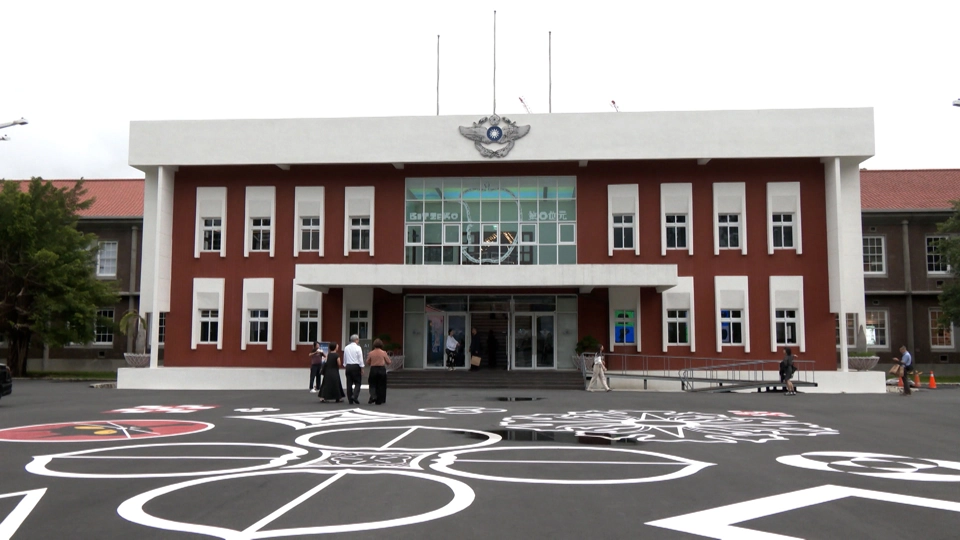 02:30
02:30 03:28
03:28 00:33
00:33 03:26
03:26 03:29
03:29 03:18
03:18 01:24
01:24 02:31
02:31 01:21
01:21 01:42
01:42