Rally sounds
Lee Shu-chuan, get elected!
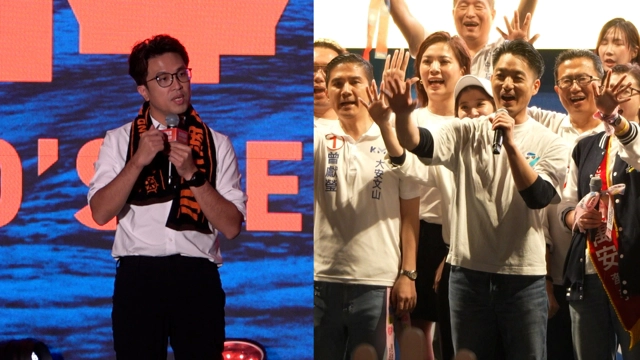
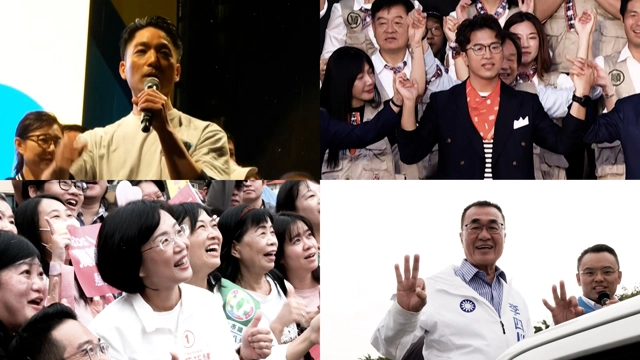
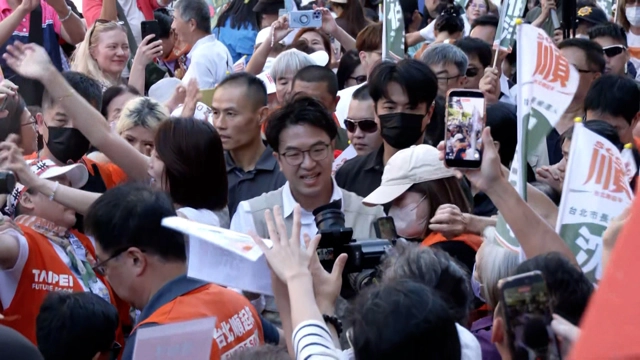
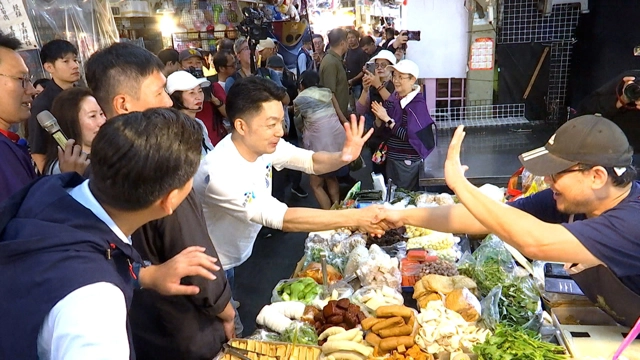
Taiwan People's Party Chair Huang Kuo-chang leads a cheer on the streets of New Taipei, but he's not campaigning for a candidate from his party. He's backing the Kuomintang's Lee Shu-chuan in the race for mayor.
It's a show of unity between the two opposition parties as they try to keep the city out of the hands of the ruling Democratic Progressive Party.
And it’s part of a broader effort by the KMT and TPP, also known as the blue-white alliance, to join forces in local races across the country.
LIU JIA-WEI, PROFESSOR, NATIONAL TAIPEI UNIVERSITY:
"Since President Lai Ching-te took office the two [opposition] parties have joined forces to pass several bills in the legislature. But the premier's refusal to countersign has prevented the bills from taking effect. Put simply, the DPP is their common political adversary."
In New Taipei, the TPP's Huang Kuo-chang gave up his own run for mayor to back the KMT’s Lee Shu-chuan, after losing the two parties’ joint primary.
In Taiwan's tech hub of Hsinchu city, both parties are supporting incumbent Mayor Kao Hung-an, a former TPP member now running as an independent after leaving the party amid a corruption scandal.
And in the southern city of Chiayi, the KMT is backing former TPP legislator Chang Chi-kai instead of fielding its own candidate.
While the two parties have found common ground in several races, their cooperation hasn't always been smooth.
Ahead of the 2024 presidential election, they tried to agree on a single candidate to run against the DPP's Lai Ching-te, but the alliance fell apart at the last minute.
Both parties ended up fielding their own candidate and Lai won the three-way race with 40 percent of the vote.
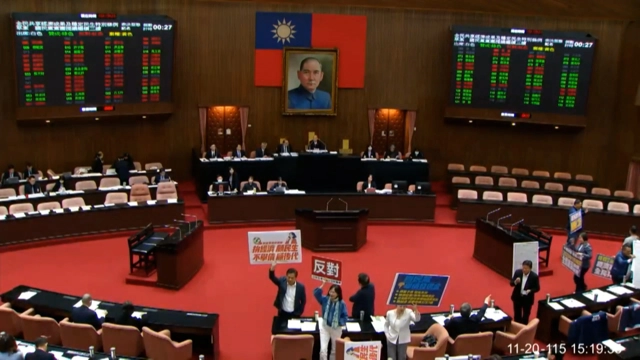
Since then, the two parties have worked together in the legislature, where they hold a combined majority. They've joined forces to pass several bills opposed by the DPP.
But disagreements have also emerged in this year's local elections.
In Zhubei in Hsinchu County, the KMT and TPP are fielding their own mayoral candidates after failing to agree on a joint contender.
The dispute shows that the two parties still have work to do to strengthen their partnership.
LIU JIA-WEI, PROFESSOR, NATIONAL TAIPEI UNIVERSITY:
"There are still quite a few TPP supporters who, given the broader political climate feel that the KMT and TPP aren't really working closely together. This has to do with their disagreement [in Zhubei]. So the KMT leadership needs to show greater sincerity in working with the TPP."
Even where the parties have agreed to team up, the next challenge is turning that cooperation into votes.
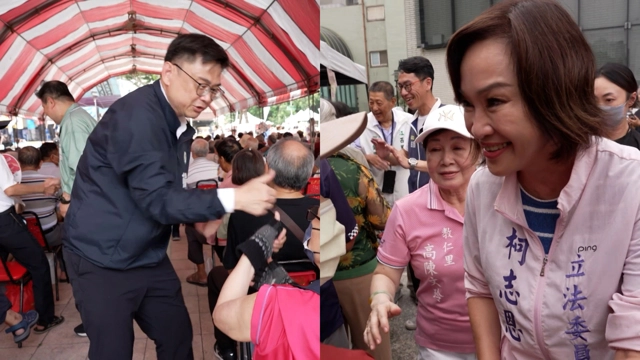
In New Taipei, KMT candidate Lee Shu-chuan – backed by the TPP -- faces DPP lawmaker Su Chiao-hui.
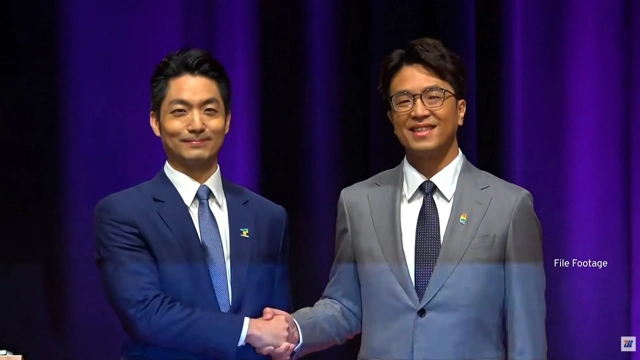
And in the capital Taipei, while there is no formal alliance, TPP Chair Huang Kuo-chang has appeared alongside KMT Mayor Chiang Wan-an. TPP founder Ko Wen-je has also urged his supporters to vote for anyone but DPP candidate Puma Shen.
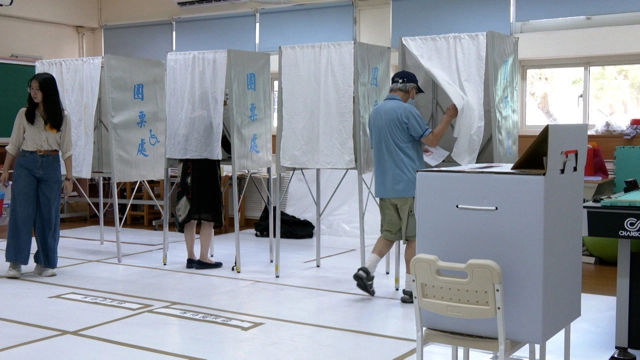
But whether these efforts translate into victories could depend on how many voters turn out.
LEV NACHMAN, ASSISTANT PROFESSOR, NATIONAL TAIWAN UNIVERSITY:
"Both Taipei and New Taipei, I think for me are very blue cities. And what that means is that the average voter who would typically turn up for a local election is going to be blue leaning. Ultimately, I think it's going to come down to a matter of voter turnout. I think low voter turnout favors the KMT, and high voter turnout is going to favor the DPP quite a bit in both of these places."
The results could help the KMT and TPP assess their cooperation ahead of the 2028 presidential election.
But a lasting partnership may require more than agreeing on candidates. The two parties may also need to find common ground on policy.
LIU JIA-WEI, PROFESSOR, NATIONAL TAIPEI UNIVERSITY:
"I think [the KMT and TPP] need to think about the future and start thinking about whether they can cooperate not just in elections but also on policy. For example, if Kao Hung-an wins in Hsinchu City there will be many areas to cooperate with neighboring Hsinchu County. If the KMT candidate wins Hsinchu County how would the two sides work together?"
With election day approaching, candidates are making their final push, going out to every street, market and temple they can to reach voters.
For now, the KMT and TPP are focused on winning races like this one in New Taipei. But once the votes are counted, both parties will have decisions to make about the future of their partnership -- and how far they're willing to take it.
Justin Wu and Tiffany Wong in New Taipei for TaiwanPlus.
 04:58
 04:15
 03:13
 00:55
 05:17
 02:46
 00:59
 02:13
 03:59
 03:18
 02:03
 02:03
 01:38
 00:26
 01:13
 01:55