 05:17
By Justin Wu/Tiffany Wong
Taiwan's local election campaigns are entering their final stretch, with voters set to choose thousands of officials, including the leaders of all 22 cities and counties, on November 28. While focused on local governance, the races are also being closely watched as an indicator of Taiwan's political mood ahead of the 2028 presidential election. Key contests in Taipei and New Taipei could have major implications for both the ruling Democratic Progressive Party (DPP) and the opposition Kuomintang (KMT). Analysts say the results will also be monitored closely in Washington and Beijing for clues about Taiwan's political direction.
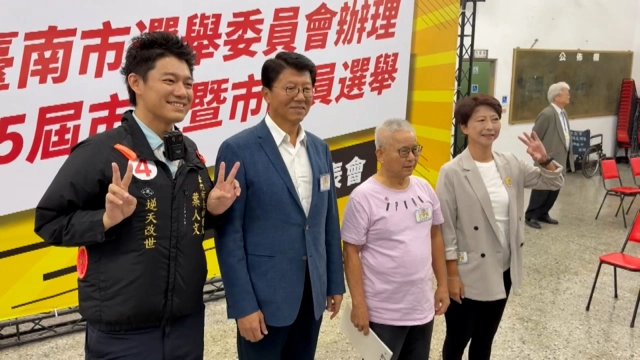
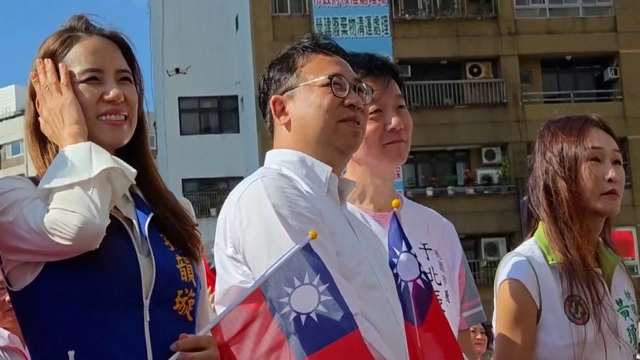
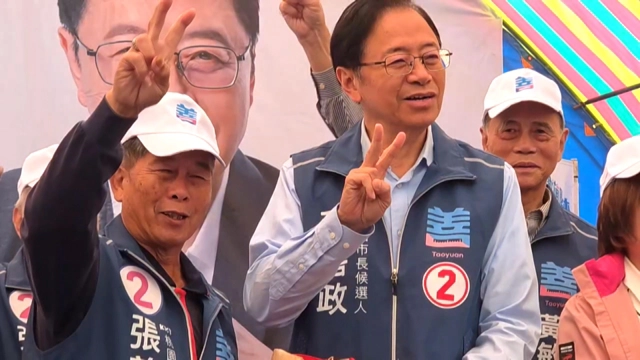
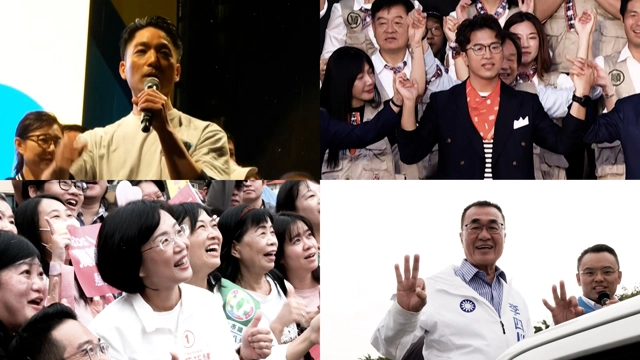
The race is on across Taiwan, with candidates hitting the streets and rallying supporters ahead of local elections on November 28.
Voters will choose thousands of local officials, including the heads of Taiwan's 22 cities and counties. But these elections are about more than local governance. They also serve as a barometer of the national political mood.
For Taiwan's major political parties, winning local offices helps build grassroots support, strengthen political networks, and raise the profiles of potential national leaders.
And with the next presidential election two years away, the stakes are especially high.
The opposition Kuomintang currently controls most of Taiwan's cities and counties, but the ruling Democratic Progressive Party is looking to expand its local foothold. Among the races drawing attention are the capital Taipei, and the country's most populous city, New Taipei.
In Taipei, incumbent KMT mayor Chiang Wan-an is seeking a second term against DPP lawmaker Puma Shen. And in neighboring New Taipei, former Taipei deputy mayor Lee Shu-chuan is facing DPP lawmaker Su Chiao-hui, the daughter of former premier Su Tseng-chang.
Both cities are traditional KMT strongholds and key political battlegrounds.
Victories there would give the DPP a boost ahead of the 2028 presidential election, while losses for the KMT could raise questions about the party's leadership and future direction.
DAVID SACKS, SENIOR FELLOW, ASIA STUDIES COUNCIL ON FOREIGN RELATIONS:
"Well, I think that you look at the big races, right? You look at Taipei City, you look at New Taipei City. If Puma Shen is able to pull an upset in Taipei City, if Su Chiao-hui is able to prevail in New Taipei City, and if the DPP is able to win a couple of other high-profile races, then I think it's very challenging for Cheng Li-wun to maintain the chairmanship."
Cheng Li-wun is the chair of the KMT, and she’s among the party’s potential presidential candidates for 2028.
But several KMT heavyweights may also seek the party’s nomination, including Legislative Speaker Han Kuo-yu, outgoing Taichung Mayor Lu Shiow-yen, and Taipei Mayor Chiang Wan-an.
Meanwhile, President Lai Ching-te is eligible to seek a second term, giving the DPP a clearer path towards choosing its presidential candidate.
These political dynamics are also drawing attention in Washington.
DAVID SACKS, SENIOR FELLOW, ASIA STUDIES COUNCIL ON FOREIGN RELATIONS:
"I think that there's much more interest within the United States on trying to understand dynamics within the KMT and the implications of these elections for the KMT general direction heading into 2028. And I think that the sense in Washington is that, you know, dynamics and the direction within the DPP is far more settled."
But Washington isn't the only one paying attention.
Beijing, which claims Taiwan as its territory, has long opposed the DPP and President Lai, whom it labels as a "die-hard independence separatist."
Analysts say China will be studying the election results for any sign of shifting public sentiment, particularly the level of support for the ruling party.
TZENG WEI-FENG, ASSOCIATE RESEARCH FELLOW NATIONAL CHENGCHI UNIVERSITY:
"[The Chinese Communist Party] is not necessarily assessing whether Taiwan's policy is leaning towards unification or independence. The key point is the state of public opinion and the level of support for the DPP."
The elections come after years of political confrontation.
Since the 2024 elections, Taiwan has had a divided government, with the DPP holding the presidency but lacking a majority in the legislature.
In 2025, a major campaign to recall opposition lawmakers gained widespread attention but ultimately failed, leaving the balance of power in the legislature unchanged.
Observers say Beijing could interpret these developments, along with the upcoming local election results, as signals of where Taiwan's political sentiment is heading.
TZENG WEI-FENG, ASSOCIATE RESEARCH FELLOW NATIONAL CHENGCHI UNIVERSITY:
"I think [China] may be watching Taiwan's elections, especially after the failure of the mass recall campaign last year. All 32 recall motions failed. [Beijing] may see public opinion [in Taiwan] as relatively more favorable to its interests compared with the strong opposition to China and the Chinese Communist Party in the past."
But local elections are not always a reliable guide to presidential races.
The DPP suffered major losses in the 2018 local elections, only for then-President Tsai Ing-wen to win re-election two years later. And despite the KMT's strong showing in the 2022 race, the DPP went on to win the presidency again in 2024.
With just days to go before the polls, candidates are focused on winning over voters with promises of a better future for their cities.
While the results on November 28 aren't necessarily an oracle for 2028, the outcome could still reshape the political landscape, and will be closely watched not just in Taiwan, but also in Washington and Beijing.