I solemnly swear to uphold the Constitution
and be loyal to the country.
REPORTER:
New lawmakers from the Taiwan People’s Party take the oath of office, including Li Chen-hsiu, who is making history as the first person with Chinese citizenship to serve in the country’s legislature.
This comes amid heated public debate over whether Li is eligible to hold office. Under Taiwan’s laws, she needs to give up her People’s Republic of China citizenship to serve as a lawmaker. In her first media interview since taking office, she tried to address those concerns and stressed that her loyalties lie with Taiwan.
Li Chen-hsiu (LEGISLATOR, TPP):
Although I wasn’t born in Taiwan
I’ve set my roots down here.
I’ve had children, worked and paid my taxes.
I’ve been residing in Taiwan for over 30 years.
My five children are all Taiwanese.
The time I’ve spent in Taiwan is longer
than I’ve spent in mainland [China].
Fellow citizens, please rest assured
my love for Taiwan and my determination to protect it
are no less than anyone else’s.
REPORTER:
Li came with receipts. She says she tried to renounce her Chinese citizenship last year, flying to Hong Kong and then taking the high-speed rail to Hunan Province. She said she entered China using her Taiwanese passport and a travel permit for Taiwanese residents.
But she said Chinese officials rejected her application, as China does not recognize Taiwan as a separate country.
Some lawmakers from the ruling Democratic Progressive Party argue that allowing Li to serve could potentially pose national security risks, as legislators have special access to sensitive information.
Chen Pei-yu (LEGISLATOR, DPP):
No matter which committee [Li] joins
I want to emphasize that each committee
touches on confidential information.
This is the first point.
Second, for example
even though I’m in the Internal Administration Committee
I can still request information from other government agencies
and attend their classified meetings in the legislature.
REPORTER:
The issue is a legal one. Under the Cross-Strait Act, Chinese citizens can run for election in Taiwan 10 years after moving their household registration – their official address – from China to Taiwan.
But under the Nationality Act, they need to prove they’ve applied to renounce her foreign citizenship before taking office, and show proof of success within a year.
The Mainland Affairs Council, which governs cross-strait relations, said that the laws exist to prevent foreign loyalties from influencing Taiwan’s government.
Chiu Chui-cheng (MINISTER, MAINLAND AFFAIRS COUNCIL):
Enforcing the Nationality Act
has another layer of significance.
Citizens of the People’s Republic of China
have an obligation to abide by the [PRC’s] Constitution
its National Security Law, Counter-Espionage Law
Anti-Secession Law and many other laws.
If they don’t renounce [their citizenship]
they still have a duty to comply with these laws.
And if they fail to comply
they may be subject to sanctions.
REPORTER:
In the past, China-born local officials in Taiwan have had their terms cut short because they were ultimately unable to renounce their Chinese citizenship. In fact, no Chinese citizen living in Taiwan has successfully done so.
But experts say the main problem is Beijing’s refusal to approve these applications, as all foreign nationals are subject to the same rules.
Arthur Zhin-Sheng Wang (ASSISTANT PROFESSOR, CENTRAL POLICE UNIVERSITY):
I believe that all new immigrants
should have equal rights to participate
in the political process.
But we shouldn’t make exceptions for Chinese spouses
just because China is unwilling
to issue certificates proving the loss of citizenship.
And making a law just for Chinese spouses
would be unfair to other immigrants.
REPORTER:
Now, whether Li will be removed from office or set a new precedent for Chinese citizens seeking to get involved in Taiwanese politics rests with the Interior Ministry.
New lawmakers from the Taiwan People’s Party take the oath of office, including Li Chen-hsiu, who is making history as the first person with Chinese citizenship to serve in the country’s legislature.
This comes amid heated public debate over whether Li is eligible to hold office. Under Taiwan’s laws, she needs to give up her People’s Republic of China citizenship to serve as a lawmaker. In her first media interview since taking office, she tried to address those concerns and stressed that her loyalties lie with Taiwan.
Li Chen-hsiu (LEGISLATOR, TPP):
Although I wasn’t born in Taiwan
I’ve set my roots down here.
I’ve had children, worked and paid my taxes.
I’ve been residing in Taiwan for over 30 years.
My five children are all Taiwanese.
The time I’ve spent in Taiwan is longer
than I’ve spent in mainland [China].
Fellow citizens, please rest assured
my love for Taiwan and my determination to protect it
are no less than anyone else’s.
REPORTER:
Li came with receipts. She says she tried to renounce her Chinese citizenship last year, flying to Hong Kong and then taking the high-speed rail to Hunan Province. She said she entered China using her Taiwanese passport and a travel permit for Taiwanese residents.
But she said Chinese officials rejected her application, as China does not recognize Taiwan as a separate country.
Some lawmakers from the ruling Democratic Progressive Party argue that allowing Li to serve could potentially pose national security risks, as legislators have special access to sensitive information.
Chen Pei-yu (LEGISLATOR, DPP):
No matter which committee [Li] joins
I want to emphasize that each committee
touches on confidential information.
This is the first point.
Second, for example
even though I’m in the Internal Administration Committee
I can still request information from other government agencies
and attend their classified meetings in the legislature.
REPORTER:
The issue is a legal one. Under the Cross-Strait Act, Chinese citizens can run for election in Taiwan 10 years after moving their household registration – their official address – from China to Taiwan.
But under the Nationality Act, they need to prove they’ve applied to renounce her foreign citizenship before taking office, and show proof of success within a year.
The Mainland Affairs Council, which governs cross-strait relations, said that the laws exist to prevent foreign loyalties from influencing Taiwan’s government.
Chiu Chui-cheng (MINISTER, MAINLAND AFFAIRS COUNCIL):
Enforcing the Nationality Act
has another layer of significance.
Citizens of the People’s Republic of China
have an obligation to abide by the [PRC’s] Constitution
its National Security Law, Counter-Espionage Law
Anti-Secession Law and many other laws.
If they don’t renounce [their citizenship]
they still have a duty to comply with these laws.
And if they fail to comply
they may be subject to sanctions.
REPORTER:
In the past, China-born local officials in Taiwan have had their terms cut short because they were ultimately unable to renounce their Chinese citizenship. In fact, no Chinese citizen living in Taiwan has successfully done so.
But experts say the main problem is Beijing’s refusal to approve these applications, as all foreign nationals are subject to the same rules.
Arthur Zhin-Sheng Wang (ASSISTANT PROFESSOR, CENTRAL POLICE UNIVERSITY):
I believe that all new immigrants
should have equal rights to participate
in the political process.
But we shouldn’t make exceptions for Chinese spouses
just because China is unwilling
to issue certificates proving the loss of citizenship.
And making a law just for Chinese spouses
would be unfair to other immigrants.
REPORTER:
Now, whether Li will be removed from office or set a new precedent for Chinese citizens seeking to get involved in Taiwanese politics rests with the Interior Ministry.
 03:50
03:50 00:52
00:52 04:02
04:02 03:34
03:34 00:31
00:31 00:35
00:35 02:02
02:02 00:41
00:41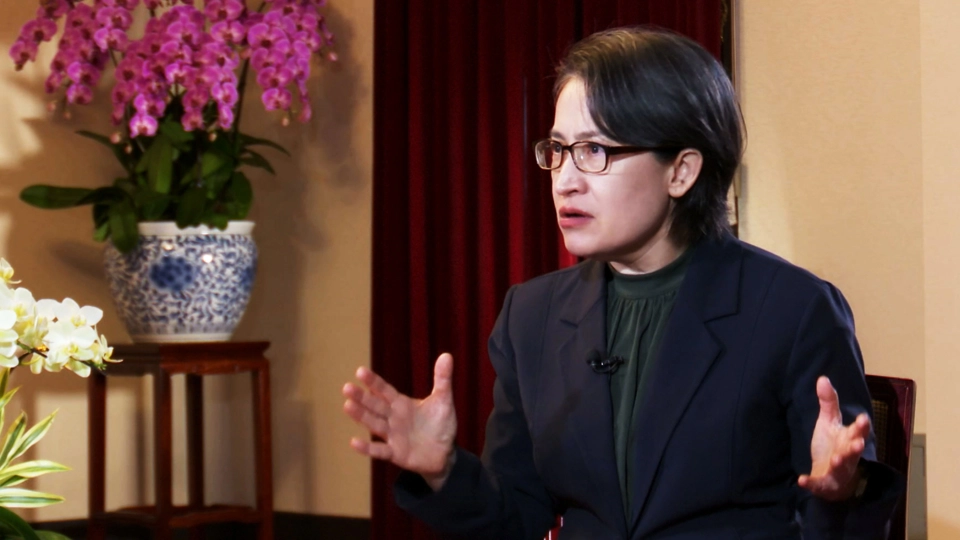 00:52
00:52 02:33
02:33 00:26
00:26 04:03
04:03 03:03
03:03 02:06
02:06 01:50
01:50 02:56
02:56