REPORTER:
The captain of a China-linked ship will spend three years in jail for tampering with the lifelines that keep an entire country online. Now Taiwanese lawmakers are pushing harsher penalties for similar crimes.
The 24 undersea cables that connect Taiwan to its outlying islands and the rest of the world are proving tempting targets for saboteurs.
In 2023 two China-linked vessels were suspected of tampering with cables. Similar incidents happened in January 2025, and again in February of the same year a cable linking Taiwan to its outlying Penghu islands was severed entirely.
Many of these incidents are linked to China, which claims Taiwan as part of its territory.
Charles Lo (NAT’L KAOHSIUNG UNIVERSITY OF SCIENCE AND TECHNOLOGY):
In international politics countries interfere with each other. That’s not outright war but it does have a semi-war nature meaning they use civilians or methods disguised as civilian to sabotage critical infrastructure including communications.
REPORTER:
Defense analysts say these attacks on Taiwan's infrastructure are examples of China’s grey zone warfare – hostile actions that do not rise to the level of open conflict.
Charles Lo (NAT’L KAOHSIUNG UNIVERSITY OF SCIENCE AND TECHNOLOGY):
When this has already become a tactic of modern gray-zone warfare the state needs to be prepared. When our undersea cables are cut what is our action plan?
REPORTER:
Part of the plan is harsher punishments – introduced through amendments to three laws.
Moving forward, those guilty of theft, destruction, or other illegal acts endangering undersea cables could face up to seven years in prison and fines of $320,000 US dollars.
Negligent damage – meaning accidents can result in six months imprisonment and a fine of up to $64,000.
Lawmakers also passed a resolution to publish information on cables’ locations to make it more difficult to claim damage was accidental or the result of ignorance.
Still, some experts think the changes don’t go far enough.
Charles Lo (NAT’L KAOHSIUNG UNIVERSITY OF SCIENCE AND TECHNOLOGY):
The penalty is actually imprisonment for more than one year and less than seven years. In our judicial practice, cases that receive the maximum seven-year sentence are extremely rare.
REPORTER:
They also point out that for some, the reward could outweigh the risk.
Charles Lo (NAT’L KAOHSIUNG UNIVERSITY OF SCIENCE AND TECHNOLOGY):
Let’s say Taiwan sentences someone to three or four years. If the person behind them the mastermind, the one with the motive pays them more than what three or four years in prison is worth then they won’t care if their ship is confiscated or how long they’re jailed.
REPORTER:
Taiwan is not alone in facing these tactics. Russian and Chinese-linked ships are suspected of cutting cables in Baltic Sea as well. Taiwan has signed agreements on cable initiatives with some European countries. And the US government has moved to consider new legislation on the matter.
This legislation is another step, but not the final one, in ensuring that Taiwan’s critical infrastructure remains protected.
Howard Chang and Lery Hiciano, for TaiwanPlus.
 04:02
04:02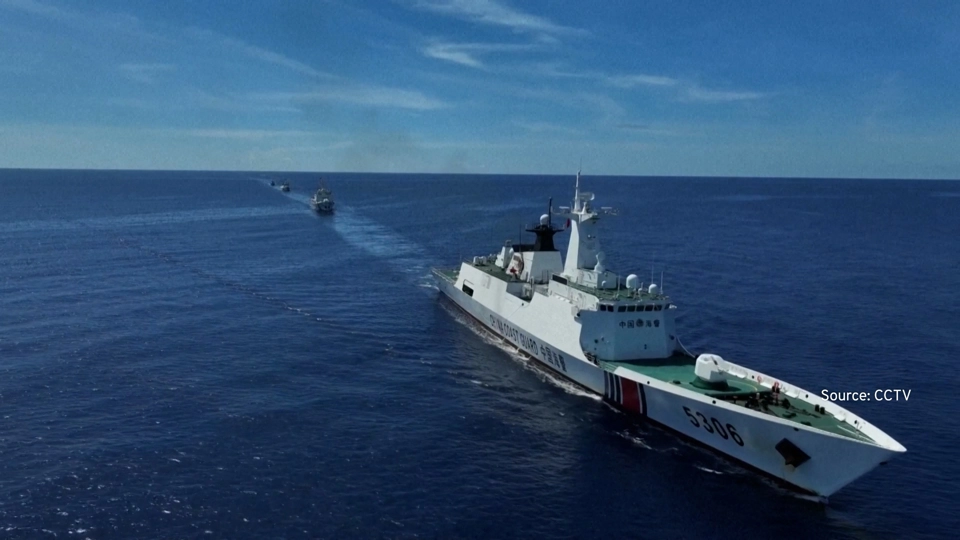 00:31
00:31 02:54
02:54 02:33
02:33 04:03
04:03 03:00
03:00 00:26
00:26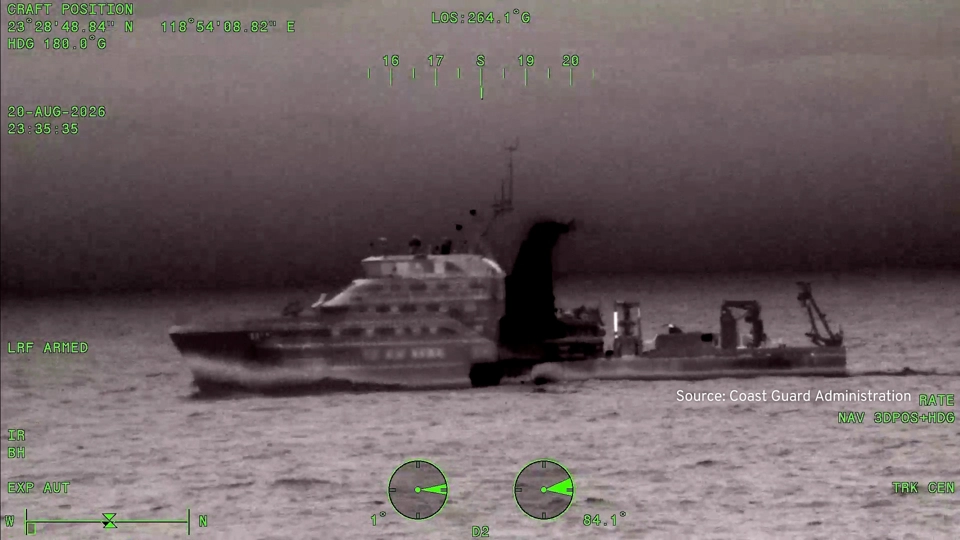 00:35
00:35 03:03
03:03 02:56
02:56 00:27
00:27 00:26
00:26 00:33
00:33 03:21
03:21 03:19
03:19 03:23
03:23