REPORTER:
These food delivery couriers bring warm food right to people’s doorsteps every day. But the job isn’t easy. Over the years, groups have been fighting for labor protection and fair pay. Now, legislators have passed a special law meant to do just that.
Lin Yueh-chin (LEGISLATOR, DPP):
Food delivery apps have been in Taiwan for over a decade. For a long time, couriers have faced a lack of salary transparency, difficulty filing complaints and occupational hazards. This new law will fill those gaps. It safeguards the pay structure, complaints mechanism and the right to disconnect. The platform also can’t terminate contracts unilaterally and must cover couriers’ insurance.
REPORTER:
The new law ensures that couriers can earn at least 1-and-a-quarter the country’s minimum hourly wage and require salary calculations to be open and transparent.
REPORTER:
Uber Eats, the largest delivery platform in Taiwan, said it respects the new changes, but they could disrupt how it groups multiple orders into a single delivery, a system it says keeps costs down and deliveries efficient. It says treating each order as a separate trip will drive up costs, likely hitting both couriers’ pay and customers’ bills. But some delivery drivers say the platform’s batch system was unfair to begin with.
Lung Jui-an (DELIVERY DRIVER):
Of course it’s unfair. Say we have three orders in one trip. The platform takes money from three customers and three restaurants but only pays the courier for one order, sometimes as little as [US$0.76] or nothing at all.
REPORTER:
They say batched orders mean they’re underpaid and it slows them down, so ditching it would actually benefit them and the customers.
Su Po-hao (SPOKESPERSON, TAIWAN DELIVERY INDUSTRY RIGHTS ALLIANCE):
If the platform counts the orders individually it would be less inclined to batch orders and wouldn’t batch those in opposite directions because it would add to its cost. Nobody’s rights would be affected. The quality of food orders and the pickup process would be protected.
REPORTER:
The law still needs approval from the premier and president. If it takes effect, these couriers hope it will finally give them a more equal voice with delivery apps, allowing them to keep delivering hot meals right to hungry people.
Howard Chang and Irene Lin for TaiwanPlus.
 02:37
02:37 02:57
02:57 03:57
03:57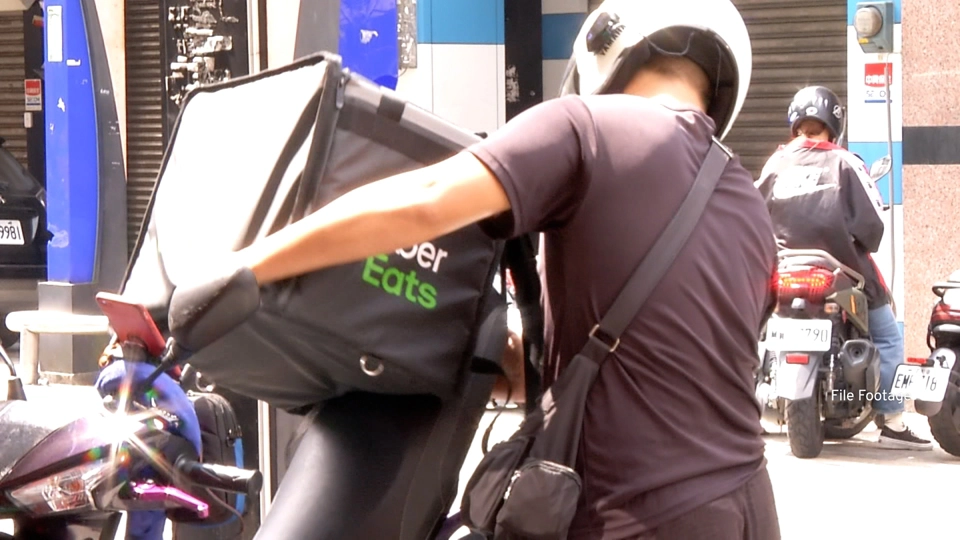 00:34
00:34 02:46
02:46 00:30
00:30 03:37
03:37 03:27
03:27 02:37
02:37 02:32
02:32 04:52
04:52 01:39
01:39 02:37
02:37 00:46
00:46 02:28
02:28 03:01
03:01