Tensions Rise Over "Taiwan Contingency" After Japanese PM's Comments
REPORTER:
After Prime Minister Takaichi Sanae’s comments on a “Taiwan contingency,” Chinese officials have only grown more strident.
First was a now-deleted tweet from China’s consul-general in Osaka saying necks should be “cut,” spiraling up to China’s defense ministry directly threatening Japan with a “crushing defeat” and the government warning its citizens to no longer travel to the country.
Jiang Bin, SPOKESPERSON, CHINESE DEFENSE MINISTRY:
Should the Japanese side fail to draw lessons from history and dare to take a risk, or even use force to interfere in the Taiwan question, it will only suffer a crushing defeat against the steel-willed PLA and pay a heavy price.
REPORTER:
This is the first test of Sanae’s leadership, only two weeks after she met with Chinese President Xi Jinping in South Korea at this year’s APEC Summit to stabilize relations.
Even before becoming prime minister, Sanae’s stance on Taiwan, and controversial issues like Japan’s actions in World War II, angered China and led to reservations in Beijing.
The Japanese government insists that its position on Taiwan has not changed.
Kihara Minoru, JAPANESE CHIEF CABINET SECRETARY:
Issues over Taiwan need to be resolved via dialogue in a peaceful manner and that’s what we expect, and that’s the government’s consistent stance. Also, the government’s stance on the 1972 Japan-China Declaration is the policy and that remains unchanged.
REPORTER:
A Friday op-ed in the Chinese state-owned People’s Daily, said Sanae is the first Japanese leader since 1945 to threaten China.
At the heart of the matter is a question of whether Japan, which constitutionally does not have an army and cannot deploy its forces except in cases of self-defense, could legally intervene in a Taiwan Strait conflict.
Prior Japanese leaders usually followed the US’ policy of maintaining strategic ambiguity on Taiwan’s defense, and what steps they would take if a conflict were to break out.
Yet despite the pressure from Beijing, which included summoning Japan’s ambassador to lodge a complaint, Takaichi has not retracted her comments.
William Yang, INTERNATIONAL CRISIS GROUP:
Beijing trying to impose more pressure, both verbally and diplomatically, to try to force Takaichi back to retracting her comment and then returning to the more long standing policy that Japan has, you know, always implemented in place, with regard to the issue of Taiwan.
I think for her to backtrack, her comment is probably quite unlikely in the near term unless there is an obvious domestic pushback against what she had said.
REPORTER:
Taiwan is just over 100 kilometres from Japan’s easternmost island, making an invasion an acute concern for Japan’s security.
The issue has so far been limited to statements and rhetoric, but asking Chinese citizens to no longer travel to Japan could hint at potential economic consequences.
Joseph Wu and Lery Hiciano, for TaiwanPlus.
 02:15
02:15 03:07
03:07 03:25
03:25 03:01
03:01 00:42
00:42 00:30
00:30 02:42
02:42 02:54
02:54 03:24
03:24 02:06
02:06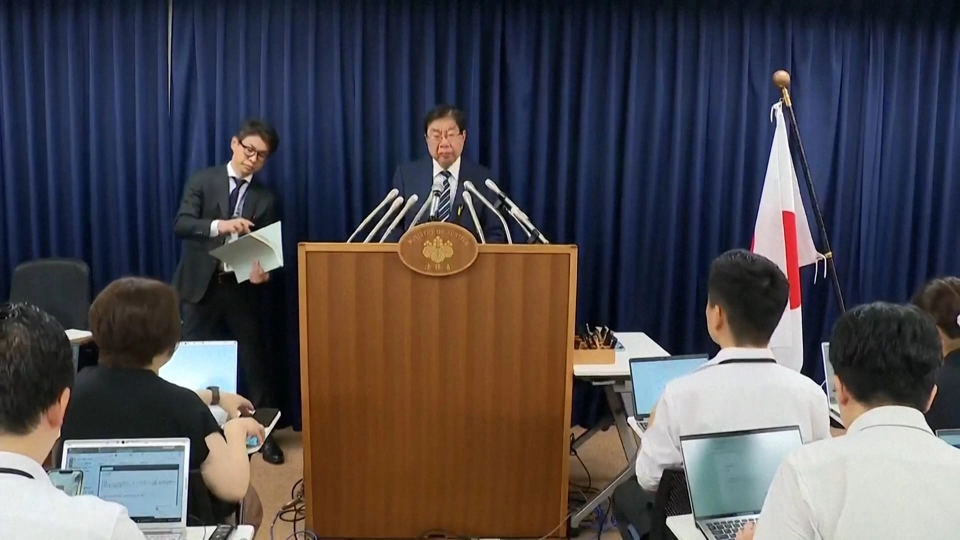 00:32
00:32 00:29
00:29 00:30
00:30 03:50
03:50 03:09
03:09 04:36
04:36