Chinese Propaganda in the Philippines
---
How is China infiltrating the Philippines through disinformation campaigns?
REPORTER:
How is China infiltrating the Philippines through disinformation campaigns?
Renato de Castro (DISTINGUISHED PROFESSOR, DE LA SALLE UNIVERSITY):
Well, when you talk about Chinese information influence operation, it's multi-layered. You know, it's been there for quite some time. Uh, you have to understand, basically the different modes or layers were in. Of course, China tries to influence the ordinary Filipino number one, of course, the most basic is the Chinese diaspora. You have, of course, uh, hundreds of thousands of Filipino Chinese. And many of them, of course, owe their allegiance to mainland China or the People's Republic of China. So they're the natural conduit for Chinese influence operation. So what they basically read from the, you know, Chinese media or, you know, the, uh, newspapers in Chinatown that are sympathetic to the People's Republic of China. So they readily accept it. And of course, they ventilate it to their relatives, to their, uh, people. And of course, when you look at the Filipino-Chinese community in the Philippines, they're basically they own the manufacturing and the financial and even the commercial section. So you have their strong influence when it comes to the business section. Then, of course, you have the Chinese embassy that's very much active in financing troll farms. So, uh, this year, of course, there was an exposé by the Philippine intelligence community about the Chinese embassy in Manila paying about $300 million to, uh, several a company that's, uh, running a managing troll troll farms to attack, of course, the United States and the Philippine US alliance. So, uh, that's the element there. You have the Chinese diplomatic community very active in terms of, uh, this, uh, This operation. Then of course you have Filipino academics or analysts, or they claim to be academics who are, of course, embedded in several think tanks that, of course, also articulating the Chinese narrative. So they also get support, of course, from the Chinese embassy.
And recently, of course, what is being noticed is Chinese operation, Chinese influence operation through social media, that, of course being conducted from the People's Republic of China. So you can see really well funded, well well oiled and of course multi-layer Chinese influence operation going on in the Philippines.
---
To what extent do you think private companies in the Philippines are vulnerable to misinformation campaigns or information warfare by China? And how might those companies move to mitigate those risks and vulnerabilities?
REPORTER:
To what extent do you think private companies in the Philippines are vulnerable to misinformation campaigns or information warfare by China? And how might those companies move to mitigate those risks and vulnerabilities?
Renato de Castro (DISTINGUISHED PROFESSOR, DE LA SALLE UNIVERSITY):
In a liberal democracy, you cannot simply repress it. You cannot be like them. You cannot be like the People's Republic of China in a pluralistic, competitive environment where you, of course, allow this kind of pro-Chinese narrative, of course, to operate. Of course, the major challenge there is the fact that number one, of course, uh, I think it has something to do with history that Filipinos compared to other Southeast Asian countries, compare, of course, to Singaporeans to the Thai. Uh, they are, of course, an ingrained distrust of the Chinese or People's Republic of China. So If you look at these surveys being conducted by, let's say, Pulse Asia, the Social weather station, and even the annual survey being conducted by the Institute of Southeast Asian Studies in Singapore, consistently the Filipinos express distrust towards China
So that's the main challenge. Of course, they are very much active, but of course they are. You know, it's just like, uh, you see waves going to a sea wall. Uh, they're very active. They're very powerful. But of course, there is, of course, an inherent distrust of China among the majority of Filipinos. Second, of course, when you look in terms of this Chinese operation being conducted in a pluralistic, competitive media environment. You see, of course, the fact that it's kind of the effect of Chinese influence operation is diminished by the fact that it had to compete with other, you know, discourse or narratives, especially, of course, in a society that basically looks at, for example, the West, like for example, Japan. Uh, I think Taiwan, uh, and many European countries. So Chinese influence operation, uh, effectivity is more or less mitigated by a competitive, pluralistic media environment.
Plus, of course, the third element there, that of course mitigates against effectivity of Chinese influence operation is what the Chinese is saying. This is we are benign, we are friendly. We would like to basically resolve the South China Sea issue is contradicted by their actions in the South China Sea, like, of course, the harassment of Philippine Coast Guard vessel actions of the Chinese Coast Guard, driving away, of course, Filipino fishermen fishing in their traditional fishing ground. Uh, for Chinese Coast Guard trying to harass or impede the resupply of, uh, you know, a small Philippine garrison on board the BRP Sherman.
And, of course, this is magnified by the Philippine Government Transparency Initiative. So I would say it's very active, it's well oiled, it's well financed. But at the same time, its effectivity is more or less challenged by those factors that I have just mentioned.
---
What can the Philippines and Taiwan learn from each other, or what can they work on together to better face this threat that both of them seem to be going through right now?
REPORTER:
Zooming out from the Philippines and looking at the region more broadly. It's not the only country that is currently facing issues in either in misinformation or in maritime boundary disputes with China. What can the Philippines and Taiwan learn from each other, or what can they work on together to better face this threat that both of them seem to be going through right now?
Renato de Castro (DISTINGUISHED PROFESSOR, DE LA SALLE UNIVERSITY):
There should be an active engagement of two liberal democracies, two island republics that are, of course, faced by a common threat Chinese influence operation, and of course, Chinese aggression and expansion into our maritime domain.
In the case of the Philippines, of course, we have the challenge of confronting the Chinese in the West Philippine Sea, South China Sea, and slowly, of course, there's also recognition that Chinese irredentist agenda against China will be a threat to Philippine national security. No less than President Ferdinand Marcos said it.
I think it was in August, early August when he was, of course, in India and he was interviewed that, you know, if China would attack Taiwan and there'll be a major conflict here, the Philippines will be pulled, dragging and kicking. So there's also recognition of the fact that we are not only, you know, uh, you know, liberal democracies, our security is more or less intertwined by the fact that we are neighbors and we are confronted by a common threat, Chinese maritime expansion into the first island chain.
 03:39
03:39 02:15
02:15 03:07
03:07 03:25
03:25 03:01
03:01 00:42
00:42 00:30
00:30 02:42
02:42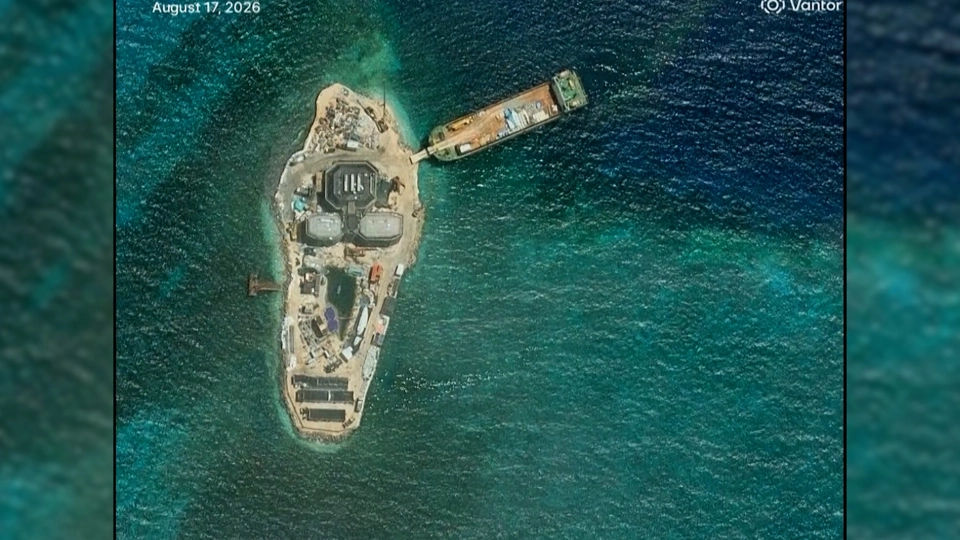 02:54
02:54 03:24
03:24 02:06
02:06 00:32
00:32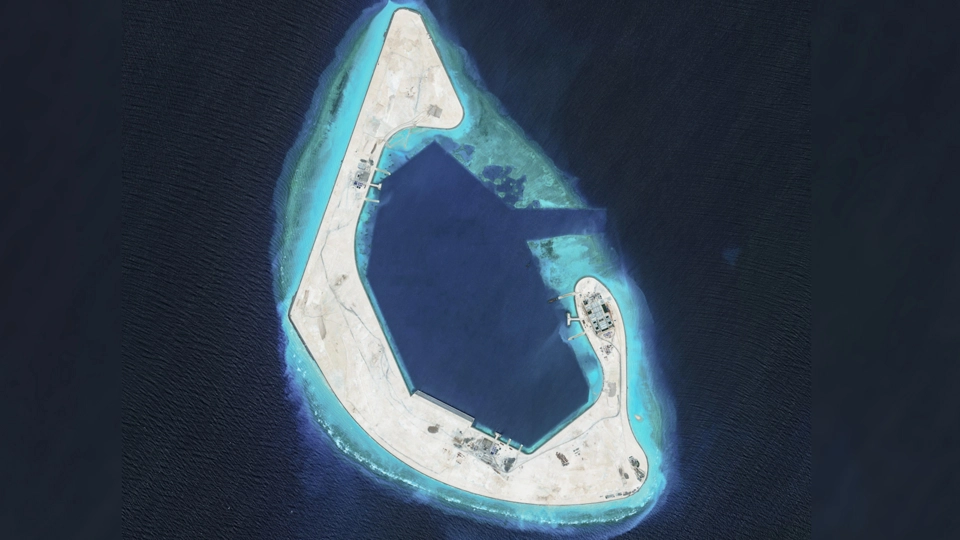 00:29
00:29 00:30
00:30 03:50
03:50 03:09
03:09