Six candidates. Intense debates. The race is on to decide who will be the Kuomintang’s next leader. Each is trying to show that they can bring Taiwan's biggest opposition party back to power, winning over their party members and the public, with the presidency up for grabs in 2028.
The frontrunner is an unexpected face: former lawmaker Cheng Li-wun, who used to be a member of the ruling Democratic Progressive Party, before switching to the KMT. She says she can bring peace to the Taiwan Strait.
Cheng Li-wun (KMT CHAIR CANDIDATE, FORMER LEGISLATOR):
The two sides of the Taiwan Strait need to reconcile and cooperate to create a lasting foundation for peace. Under the framework of the Republic of China's Constitution, which stipulates that both sides of the Taiwan Strait belong to one China, we cannot continue to fight each other. Instead, the two sides must join forces and be stronger together.
Cheng’s views—wanting to unite the two sides of the Taiwan Strait—are considered extreme even within the party, but the backing of a powerful KMT military faction has put her ahead in recent polls.
These are key party members that candidates need to win over. And it’s these questions of Taiwan's relations with China that took center stage in debates leading up to the election.
Some candidates, including former Taipei mayor Hau Lung-bin, took a more moderate view, calling for an easing of tensions with China while also maintaining Taiwan’s sovereignty.
Hau Lung-bin (KMT CHAIR CANDIDATE, FORMER TAIPEI MAYOR):
I think that mainland China should declare that as long as Taiwan does not seek independence, China will not use force. I think this is the best way to achieve peace and goodwill between the two sides of the strait.
Hau has been endorsed by several city mayors and other party heavyweights, but he has also been the target of deepfake attacks, which some in the party suspect are linked to Beijing and say could indicate China does not see him as friendly enough.
Another candidate, Sun Yat-sen School President Chang Ya-chung, is hoping that sticking with a “pro-dialogue” approach with Beijing could lead to some concessions for Taiwan.
Chang Ya-chung (KMT CHAIR CANDIDATE, SUN YAT-SEN SCHOOL PRESIDENT):
I will engage in political dialogue with Beijing, looking for peace. Once we have peace, my students will have the opportunity to represent Taiwan at international organizations.
But besides dealing with China, the party is also looking for someone to give them internal unity and direction. Taichung Mayor Lu Shiow-yen, who rejected calls to run for chair herself, is seen as the party’s best bet for the presidency in 2028. Now, many candidates are vying for her endorsement.
One of them, lawmaker Lo Chih-chiang, is even running on the promise of getting Lu to be their presidential candidate in 2028.
Lo Chih-chiang (KMT CHAIR CANDIDATE, LAWMAKER):
There’s only one formula for the KMT’s presidential victory in 2028. That’s if we all rally behind Lu Shiow-yen. With me as chair, within three months of the 2026 local elections, I will recruit Lu Shiow-yen to run for president.
Two other candidates are also running: Cho Po-yuan, former Changhua County chief, and Tsai Chih-hung, a former National Assembly member.
The chair election will decide who leads the party into next year’s local elections. It will also determine who shapes policy for the party caucus in the legislature. That caucus currently holds a combined majority together with the Taiwan People’s Party, giving them control over major legislation and budget spending.
While the next chair will only be determined by party members, China and foreign observers are paying close attention to the race. That includes analysts in the US, Taiwan’s biggest security backer.
Kharis Templeman (RESEARCH FELLOW, HOOVER INSTITUTE):
I think most importantly, the US is looking for Taiwan to carry much more of the security burden on the cross-strait, the trilateral relationship. And so the Lai administration has stepped up, has made some real significant new investments in defense. And the Trump administration would like to see that continue.
Some say dialogue with the Chinese Communist Party isn’t necessarily a bad thing, but if it steers the KMT away from connections with the US, it could influence how they are viewed in Washington.
Wang Hung-jen (DIRECTOR, INSTITUTE FOR NATIONAL POLICY RESEARCH):
Chang Ya-chung is undoubtedly the least favored as he is the most China-friendly candidate, and he has no ties to the US. Neither Cheng Li-wun nor Chang Ya-chung studied in the US, so they’re not as close with that country. I think candidates who want to cooperate with China will put some distance between themselves and the US.
Analysts also say personal connections to the US could make them more appealing to Washington.
Wang Hung-jen (DIRECTOR, INSTITUTE FOR NATIONAL POLICY RESEARCH):
Of course, the US would be more familiar with Hau Lung-bin. He got a PhD in the US and has this background of studying in the US. Ever since he was Taipei mayor, he's maintained connections to the US throughout his political career. When it comes to getting along with the US, Hau Lung-bin is more comfortable, and Americans will find him more approachable.
The KMT has sometimes been criticized for being too friendly toward the Chinese Communist Party, which has not ruled out the use of force to take Taiwan.
Besides managing the party’s relationship with Washington, the next leader of the Kuomintang has more pressing concerns at home. Whoever takes over will be responsible for leading the party through next year’s local elections and the 2028 presidential election.
Looking ahead, party members will be hoping to see candidates fulfill their campaign promises, leading the party to victory in upcoming elections. That means whoever becomes the KMT’s next leader on October 18 will have their work cut out for them.
Devin Tsai and Tiffany Wong in Taipei for TaiwanPlus.
 03:50
03:50 00:52
00:52 04:02
04:02 03:34
03:34 00:31
00:31 00:35
00:35 02:02
02:02 00:41
00:41 00:52
00:52 02:33
02:33 00:26
00:26 04:03
04:03 03:03
03:03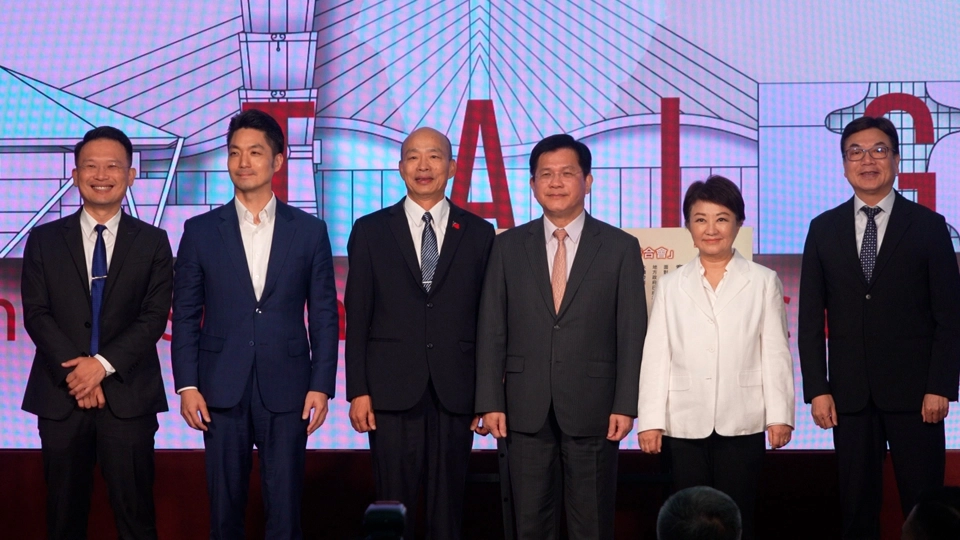 02:06
02:06 01:50
01:50 02:56
02:56