Let’s sing a traditional Siraya song from Sinkang.
Uma Talavan is at the forefront of the fight for Siraya cultural revival in Tainan, in Taiwan’s south.
They’re one of the largest Pingpu Plains Indigenous groups in Taiwan. And her family has been fighting a decades-long battle for legal recognition.
The Pingpu are lowland Indigenous peoples who were gradually absorbed into Han culture, leading to a loss of their distinct identities, and they're not officially recognized as Indigenous.
But that may now change, after Taiwan passed a special act giving the Pingpu a legal definition and allowing individual groups to apply for recognition.
Tseng Hsing-chung (SENIOR EXECUTIVE OFFICER, COUNCIL OF INDIGENOUS PEOPLES):
The Constitutional Court gave us three criteria for recognition.
They include distinct cultural characteristics, a shared group identity and verifiable historical records.
These requirements must be clearly defined by law but evaluated using more flexible standards because in Taiwan’s colonial history the Pingpu were among the first Indigenous peoples to be affected by foreign colonial powers.
So, in terms of language and culture as they blended with other groups the changes and variations in their culture were naturally greater.
REPORTER:
The legal changes follow a landmark 2022 Constitutional Court ruling that said all Austronesian-speaking peoples beyond Taiwan’s 16 recognized Indigenous groups should be allowed to identify as Indigenous.
For the nearly one million Pingpu people, the ruling was a major step toward recognition. That’s because they had assimilated into mainstream society, and colonial authorities had separated them from other Indigenous groups that were able to maintain their culture and way of life.
But Uma Tavalan is worried that it could end up creating division among Pingpu peoples.
Uma Talavan (SPOKESPERSON, SIRAYA CULTURE ASSOCIATION):
When a person’s individual and collective ethnic identity are tied together under this law will [the Siraya people] be the first, second, or third group among Pingpu peoples?
Or will we be the 17th or 18th Indigenous group?
Even our lawyer is worried about whether the Siraya will be recognized as an independent Indigenous group.
If we’re not included in the Indigenous Peoples Status Act then what exactly is our legal identity?
Is it an identity that only exists under this new Pingpu law?
REPORTER:
Legal recognition is about more than just having an official title.
Under current laws, the 16 recognized Indigenous groups are granted special rights like the ability to hunt and own reserve land and preferential treatment in college admissions.
None of those benefits are included in the new law for Pingpu peoples.
Uma Talavan (SPOKESPERSON, SIRAYA CULTURE ASSOCIATION):
We still hope to revise the current Indigenous Peoples Basic Law or simply apply most of it to us directly.
But based on what [lawmakers] have said so far there’s no consensus on this point.
[The Council of Indigenous Peoples] wants to ensure the exisiting Indigenous groups are not affected by [the new Pingpu law].
That’s why they make this argument.
Of course, they also say they’re doing this for the Pingpu but I think it still shows a kind of self-centered thinking putting their own interests first.
REPORTER:
Extending those benefits to the Pingpu would mean amending more than 300 articles in the Indigenous Peoples Basic Law, a move that could force the more than 600 thousand recognized Indigenous people to share already limited resources.
Tunkan Tansikian (ASSOCIATE PROFESSOR, NATIONAL DONG HWA UNIVERSITY):
If the Indigenous population grows there should be a proportional increase in rights and resources.
But so far, the government hasn’t promised anything.
So when it comes to officially recognized Indigenous peoples our Pingpu brothers and sisters might feel some frustration toward us.
But if you look at it from another angle the government hasn’t promised anything to anyone.
It’s like a house that’s only so big. If you pack in 20%, 30% or even twice as many people can everyone really fit?
REPORTER:
The Council of Indigenous Peoples says distributing benefits and resources should focus on what each Indigenous group actually needs.
Tseng Hsing-chung (SENIOR EXECUTIVE OFFICER, COUNCIL OF INDIGENOUS PEOPLES):
These Indigenous reserve lands belong to the mountain Indigenous peoples.
Why should Pingpu people be allowed to buy them?
Does that really make sense?
It’s not that we’re against including them in the Indigenous Peoples Basic Law.
It’s about giving them what they actually need.
REPORTER:
And those questions about what each group needs today are deeply tied to how different groups were impacted throughout Taiwan’s colonial history.
Tunkan Tansikian (ASSOCIATE PROFESSOR, NATIONAL DONG HWA UNIVERSITY):
In a way, colonial rule left us all a bit messed up.
We’re supposed to be one family but we ended up with two different historical memories.
The older generation still remembers.
They say, “Back when the Han were bullying us you were standing on their side. So you need to explain that.”
REPORTER:
The new law has given the legislature three years to grant the Pingpu the resources they need. A deadline that may force lawmakers to speed up the process. Regardless of what happens next, the Pingpu people still have a long road ahead of them to achieving full recognition.
Eason Chen and Irene Lin for TaiwanPlus.
 04:45
04:45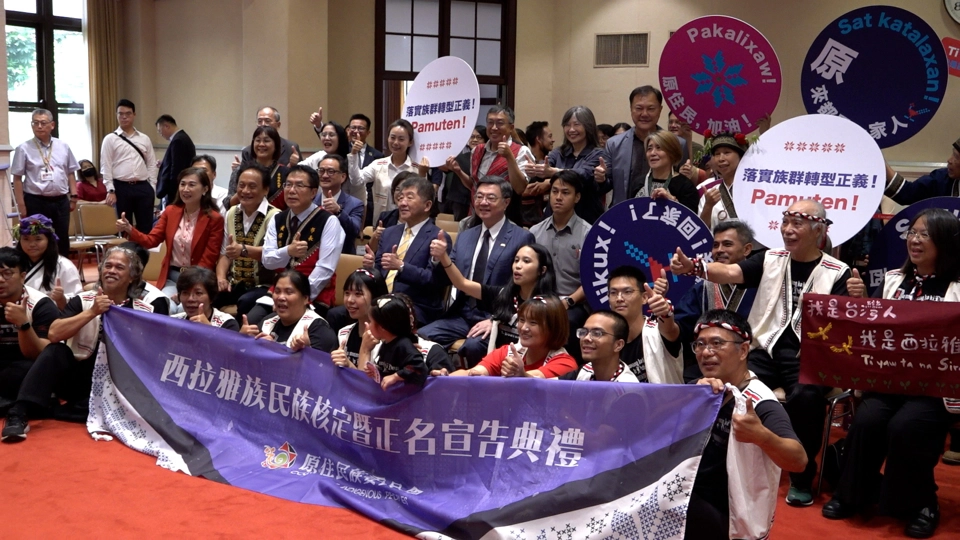 01:34
01:34 06:12
06:12 00:42
00:42 03:22
03:22 04:27
04:27 01:48
01:48 04:16
04:16 00:43
00:43 00:29
00:29 04:21
04:21 00:46
00:46 01:19
01:19 04:52
04:52 04:16
04:16 01:12
01:12