Chinese Military Purge: Xi Jinping’s Motives and Strategy
REPORTER:
Looking at Xi's removal of not only Zhang Youxia, but all these other generals and leadership of the Chinese military, what do you think this says about the relationship between the party and the PLA?
Jon Czin (BROOKINGS INSTITUTION):
This is kind of the most dramatic moment in a broader drama that’s been playing out throughout the course of his third term, where you have had these corruption investigations that have taken down the Minister of National Defense, the other vice chairman of the CMC
I think what it shows and what it demonstrates is that Xi has made come to the realization that he needs to totally clear House when it comes to the PLA high command, that there’s rot everywhere. And he’s just kind of got to uproot the entire most of that generation. I mean, notably, the only person who’s left from the high command is the actual general who oversees these anti-corruption investigations.
Because he’s gotten rid of all these guys at the top, he has a free hand to really not just pick new officials to go into those slots in the Central Military Commission, but to reconstitute it entirely.
So you’re going to have a much more, much different and I think potentially more fraught dynamic too, especially because they’re all going to be living in this highly charged political environment where they know they can be metaphorically pushed out the window at any given moment.
---
Xi’s Approach to Taiwan and the PLA
REPORTER:
A lot of other analysis and reports have concluded that Xi’s removal of Chiang, delays the PLA’s modernization, and pushes back his ambition to take Taiwan by force by next year. But you arrive at a different conclusion. Can you elaborate a little bit more on that, please?
Jon Czin (BROOKINGS INSTITUTION):
What this most recent round of purges shows is not that he’s distracted from the Taiwan issue set and from having a military that’s prepared for it, but I think it actually shows quite the opposite, right, that he's so intensely focused on this mission.
He’s willing to make a very deep incision, even into his own political network, and cull the entire leadership of the high command, because he wants the military to be prepared for this kind of contingency.
I think that moment at the end of last year where they conducted that exercise just just weeks after, uh, punctuating the last round of military purges, shows that there’s this odd disconnect, right? You have all this turmoil at the top of the PLA that’s almost operatic, right, in its drama. But at the same time, this is a large, uh, very capable bureaucracy that’s still just weeks later, able to pull off this major military operation.
---
Expectations for Cross-Strait Dynamics and PLA Changes
REPORTER:
Is there anything you’re on the lookout for in the next 6 to 24 months regarding impacts or fallout from this decision?
Jon Czin (BROOKINGS INSTITUTION):
I think from his perspective and from Beijing's perspective, I think they're feeling pretty comfortable right now, relatively about the overall international environment and about the cross-strait dynamic in particular.
President Trump has made comments that suggest he's not as invested in this issue set.
I think Xi Jinping can see that President Lai Ching-te faces a challenging domestic political environment right now. And number three, the KMT has been saying more favorable things about Beijing.
I think overall, if you're XI Jinping, uh, you are seeing 2028 and the election in Taiwan as the next natural inflection point. Not necessarily the next 24 months or so.
I expect the this dynamic to kind of continue in the coming year, right, that there will be these exercises. But I think barring some kind of exogenous shock, I don't anticipate a major escalation or ramp up in the coming year just because there doesn't seem to be a strong rationale for Beijing.
 03:07
03:07 03:23
03:23 00:42
00:42 02:42
02:42 02:54
02:54 00:25
00:25 00:46
00:46 02:36
02:36 00:33
00:33 02:50
02:50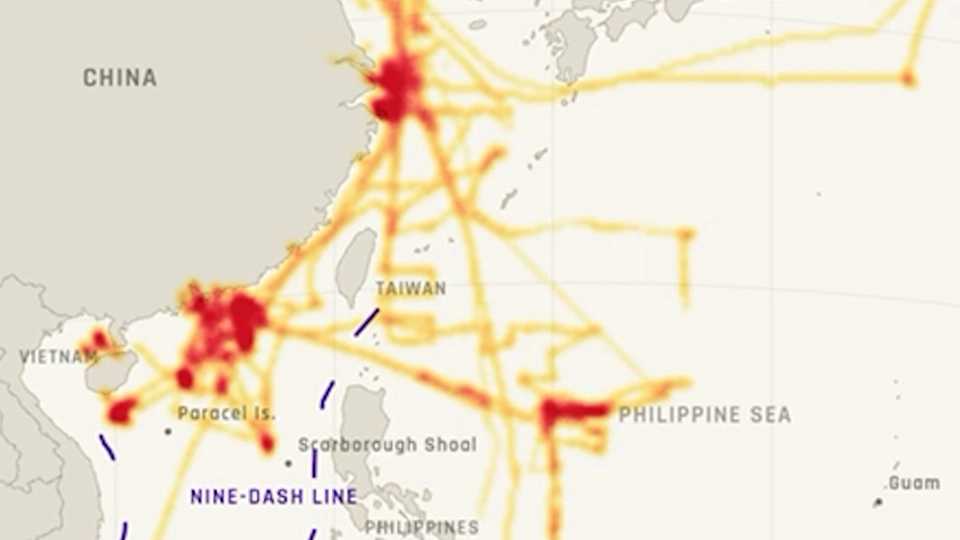 00:27
00:27 02:36
02:36 00:25
00:25 00:25
00:25 00:34
00:34 02:56
02:56