Kuomintang Accuses China of Meddling in Leadership Election
REPORTER:
Taiwan’s biggest opposition party, the Kuomintang, is about to choose its new chair. But a rare accusation from within the party—that China is meddling in the election—is stirring controversy. Beijing is using all the tools at its disposal to influence parties across Taiwan’s political spectrum.
This video appearing to show two Taiwanese politicians sharing a kiss has kicked up a storm in Taiwan.
That’s because the clip involving a local city councilor and former Taipei mayor Hau Lung-bin, now a leading candidate to head up Taiwan’s main opposition Kuomintang, isn’t real. It’s an AI deep-fake.
Videos like this have become a major issue ahead of the KMT chair election, not just because of who they target, but because of who some party members believe is behind them.
Media personality and KMT stalwart Jaw Shaw-kong says Beijing is now meddling in his party’s leadership race. Jaw says some simple internet sleuthing shows at least some of the content is coming from China.
Jaw Shaw-kong (KMT MEMBER):
You check the IP.
Some are in China, some are overseas.
Some were originally there.
And from the start, you could see it was a Chinese site.
REPORTER:
Accusations of Chinese interference in Taiwan’s elections are not new. Both the ruling Democratic Progressive Party and the third-force Taiwan People’s Party say they’ve been targeted by Chinese disinformation campaigns.
But it’s much rarer for the KMT to openly acknowledge Chinese meddling in its affairs. The party is viewed as friendlier with China and often encourages dialogue with Beijing.
Jaw Shaw-kong says social media has been flooded with content about the KMT’s chair election, but posts overwhelmingly seem to favor another leading candidate, China-friendly former lawmaker Cheng Li-wun.
He says that between September 12 and October 12, up to 900 videos were posted about Cheng on TikTok, while those about Hau Lung-bin numbered around 250.
On YouTube, Jaw says around 600 videos have appeared discussing the chair election. Among those, channels registered under Chinese IPs were mostly created last month, in the final weeks before the vote. Their messaging was highly consistent—with most backing Cheng and criticizing Hau.
And those numbers could be just the tip of the iceberg. It’s a concerning trend, but some experts say because the accounts posting these videos are mostly brand new, they might be less effective.
Gene Hong (NETWORK ENGINEER):
To have any real reach
you probably need at least 1,000
or even 10,000 subscribers
and a total view count of around 100,000.
But these accounts were all created less than a month ago.
I think they know very well themselves
that the impact for now is probably limited.
REPORTER:
Others say this case is a reminder for Taiwan to step up national security efforts.
KJ Hsu (NATIONAL SECURITY COURT JUDGE, TAIPEI DISTRICT COURT):
Influence from China has never been about supporting one party or another. It's about dividing Taiwan as a society.
So in the end, protecting democracy means making national security a shared responsibility, not only a Partisan issue.
REPORTER:
Taiwan’s National Security Bureau has weighed in on the case, saying it aims to improve legal tools to combat outside interference in Taiwan’s politics.
Tsai Ming-yen (DIRECTOR-GENERAL, NATIONAL SECURITY BUREAU):
As for the National Security Act
and the Anti-Infiltration Act
right now, there are no provisions that allow us
to investigate or prosecute cases
where outside forces interfere
in internal elections of civic groups
or political parties.
And this also involves
AI-generated videos being spread online
an area where our current legal framework
is still insufficient.
REPORTER:
But using the law to curb disinformation is a tricky tightrope walk. In a democratic society like Taiwan’s, freedom of speech could make things hard, but experts say that doesn’t mean there are no solutions.
They say exposing infiltration tactics can help raise awareness, but that ultimately, online platforms and social media need to be regulated locally.
Liu Yu-hsi (ASSOCIATE PROFESSOR, SHIH HSIN UNIVERSITY):
When it comes to online platforms
many of them are actually run by foreign companies.
But what we hope is that
they at least establish a local presence in Taiwan
and set up a subsidiary here.
That way, they can be brought under the jurisdiction
of the country where they’re providing their services.
REPORTER:
As AI tools now grow more advanced, China has more ways than ever to influence Taiwan’s politics. Experts say the best defense is to boost media literacy among the public and actively call out false or manipulated information to build a more resilient society.
 02:47
02:47 02:54
02:54 01:07
01:07 03:19
03:19 03:49
03:49 03:59
03:59 02:12
02:12 00:48
00:48 02:22
02:22 00:22
00:22 02:31
02:31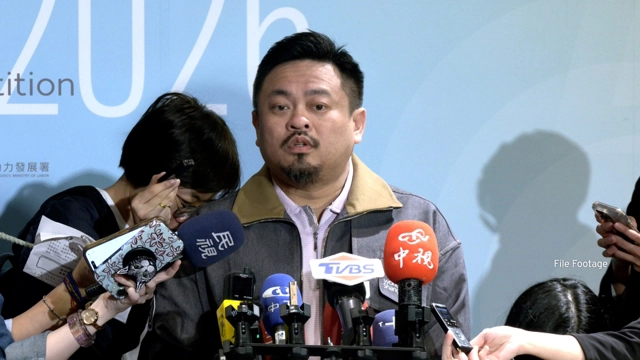 00:35
00:35 00:37
00:37 00:26
00:26 00:49
00:49 00:39
00:39